We planned our visit to Udaipur, Jodhpur and Jaisalmer in the back half of February 2025.
The history of Rajasthan is extensive. The royal family of Mewar is considered one of the longest dynasties in the world (from 569 AD to 1955).
Our first stop was Udaipur. We planned on staying 4 days in Udaipur. The plan was local sightseeing for 3 days and a day visit to Srinathji (Krishna temple). Srinathji is about an hours drive from Udaipur.
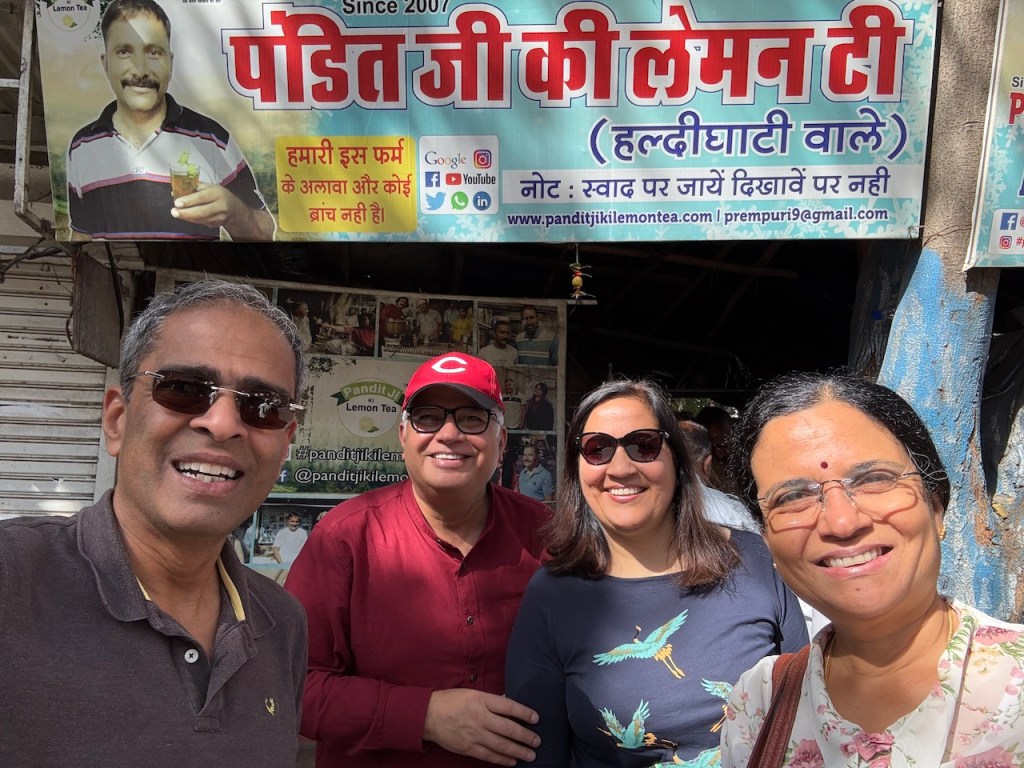
In Udaipur, we were recommended to try the lemon tea at Panditji’s shop. The tea had a very unique flavour and we all enjoyed it.
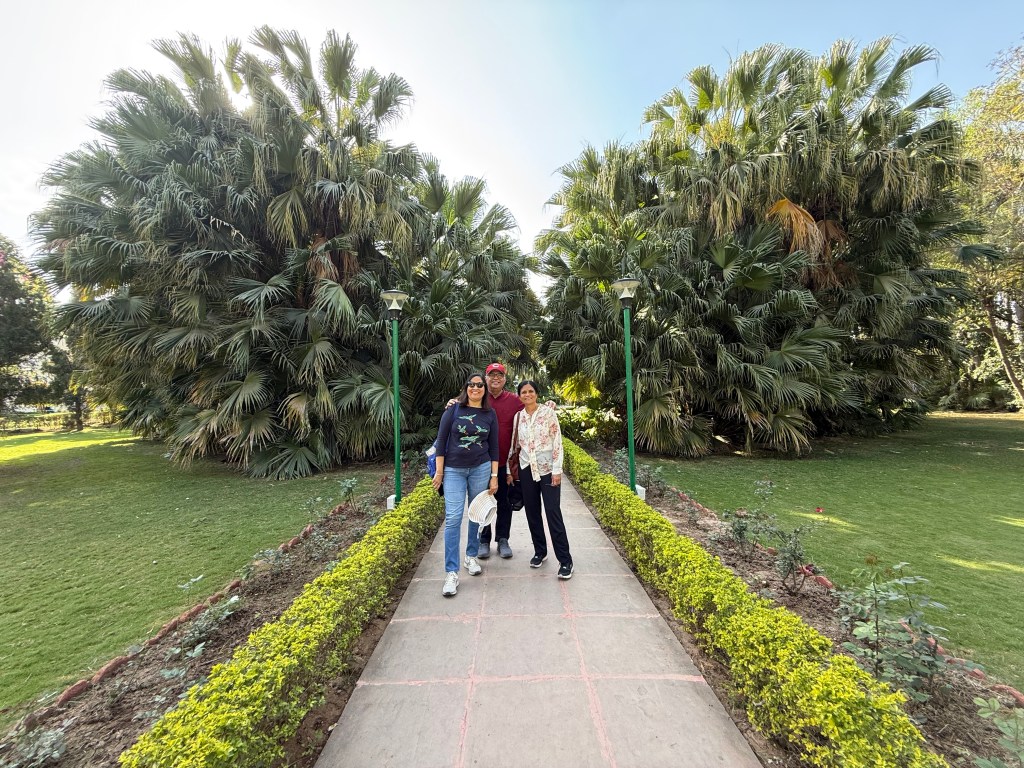
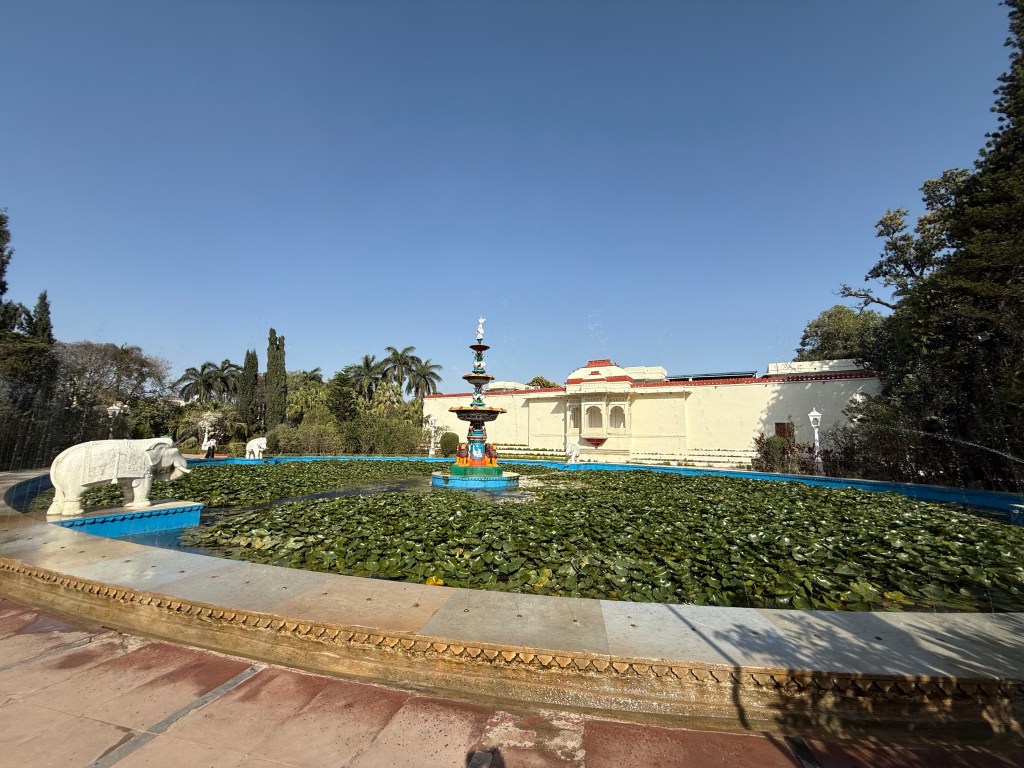
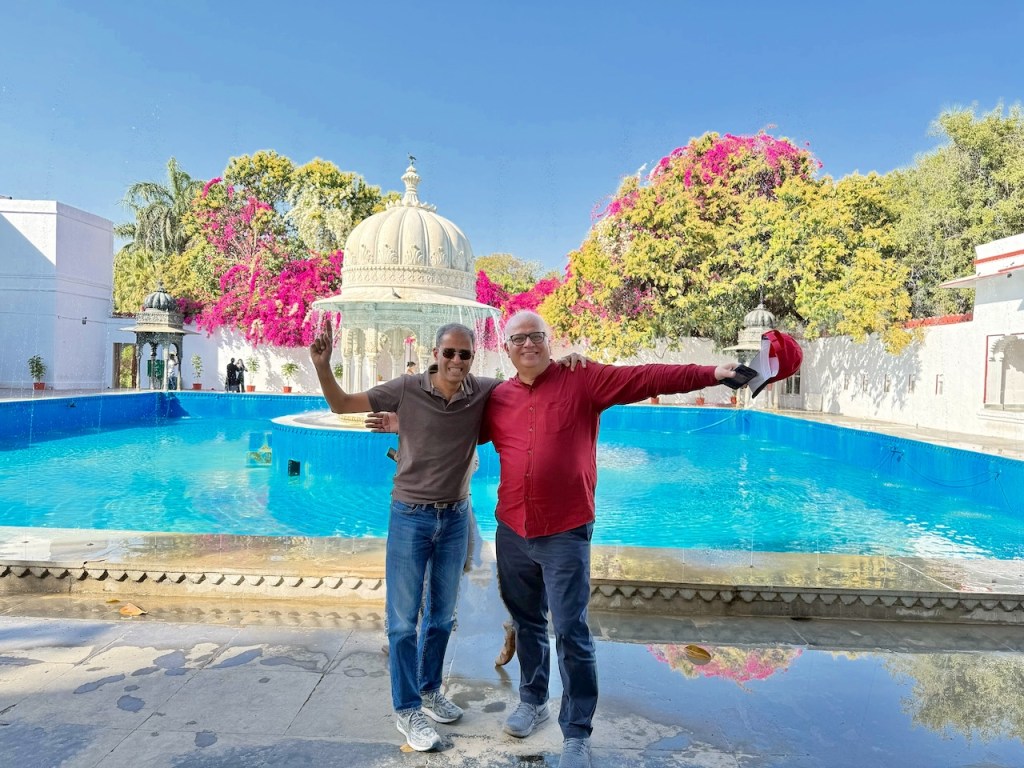
Our first visit in Udaipur was to Saheliyon ki Bari (Garden of Queen’s friends). The garden was beautiful and is really well maintained.
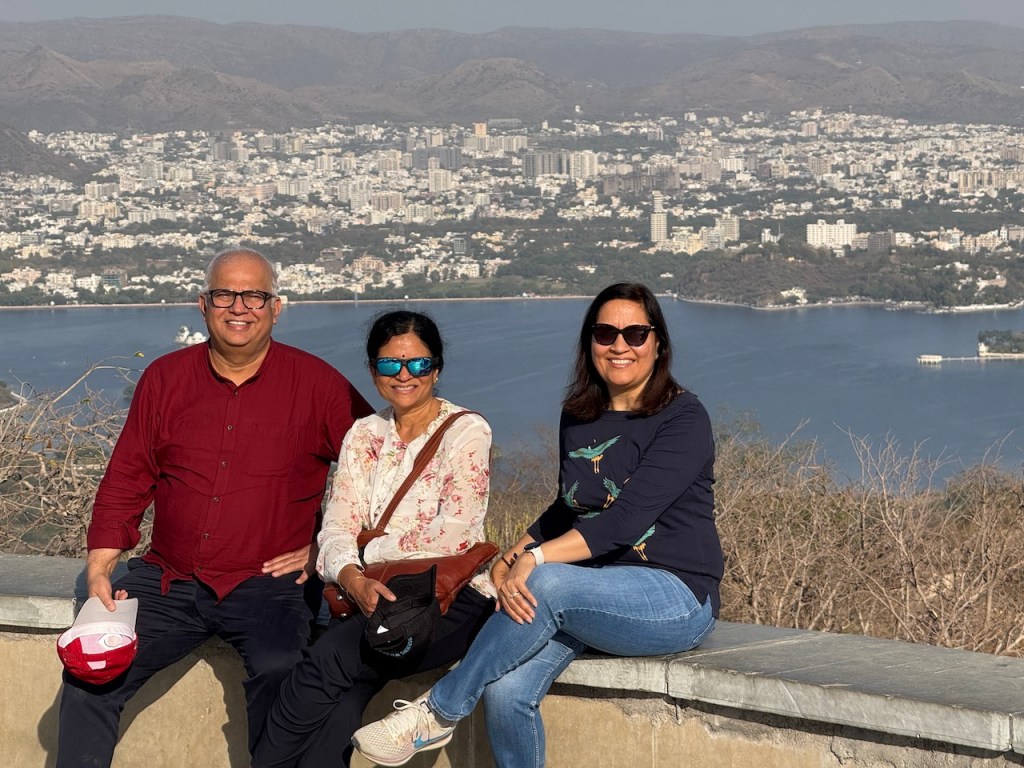
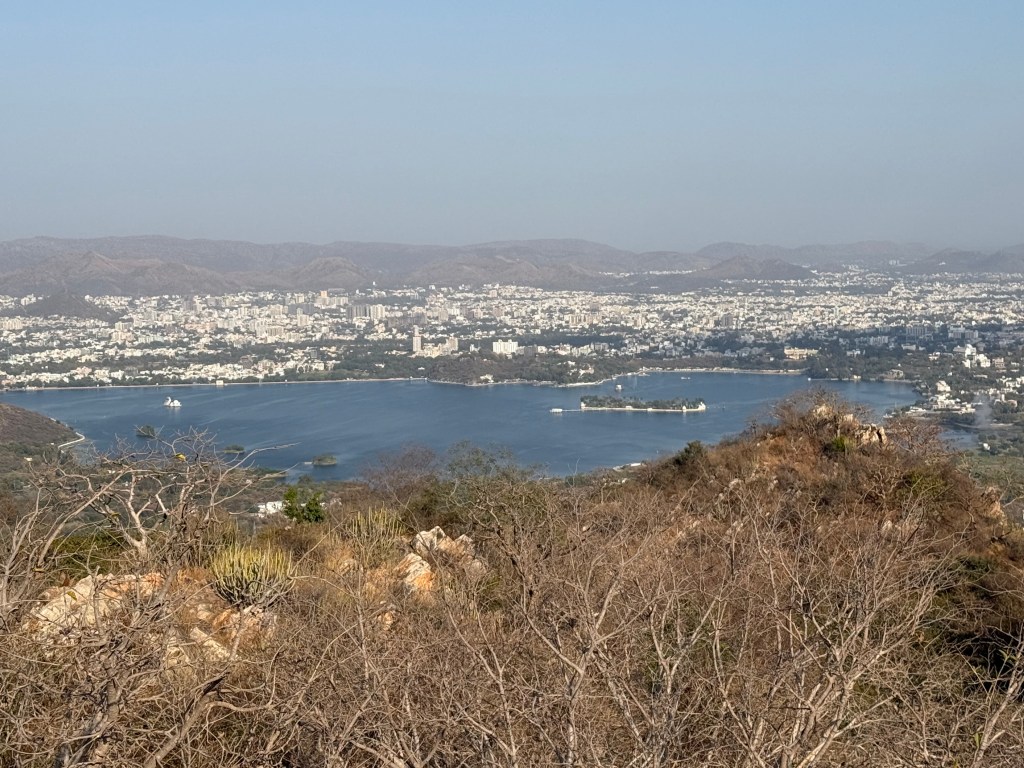
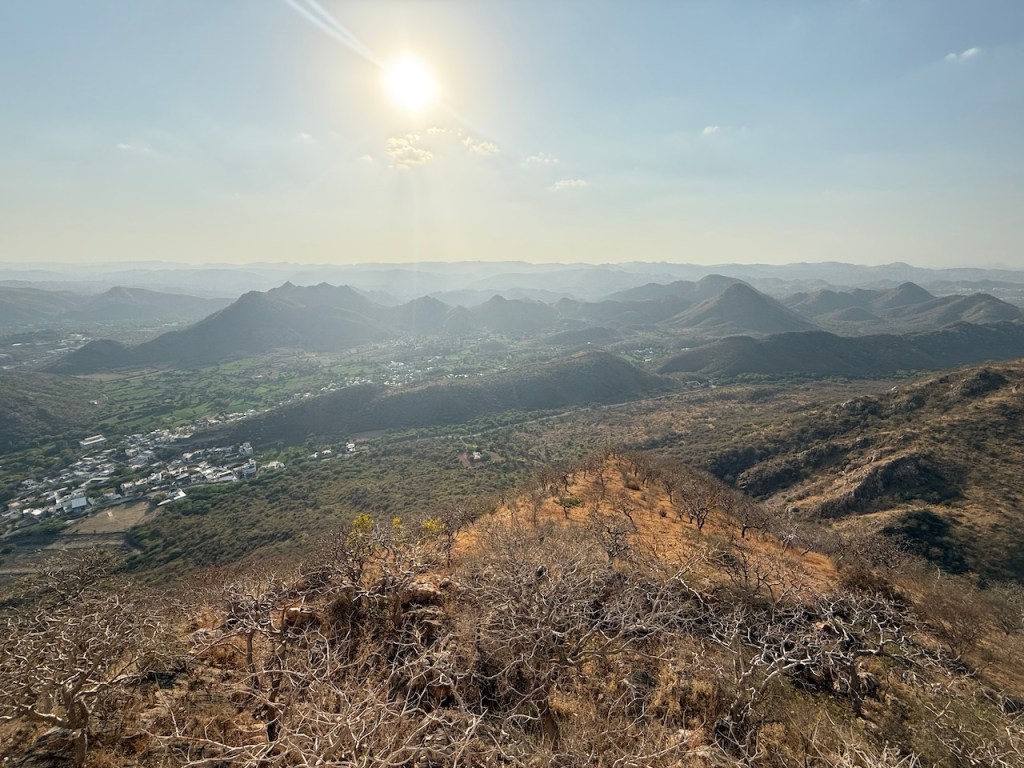
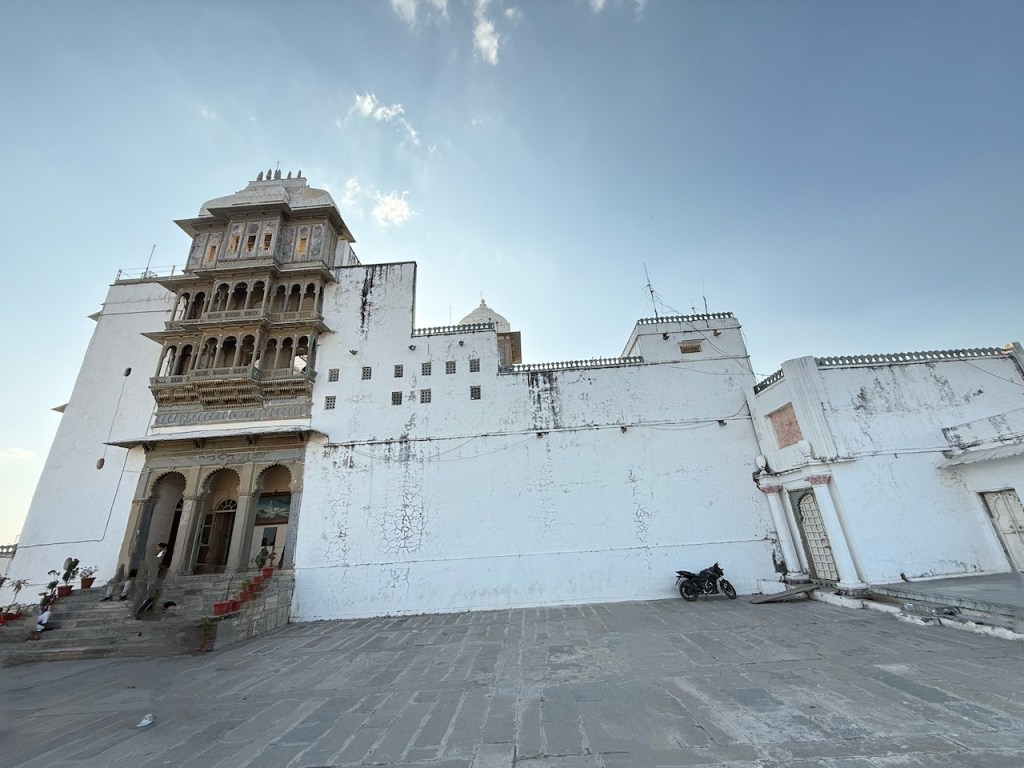
Our second visit was to the Sajjangarh Monsoon palace. The views of Udaipur, its lakes and the surrounding Aravalli ranges were spectacular.
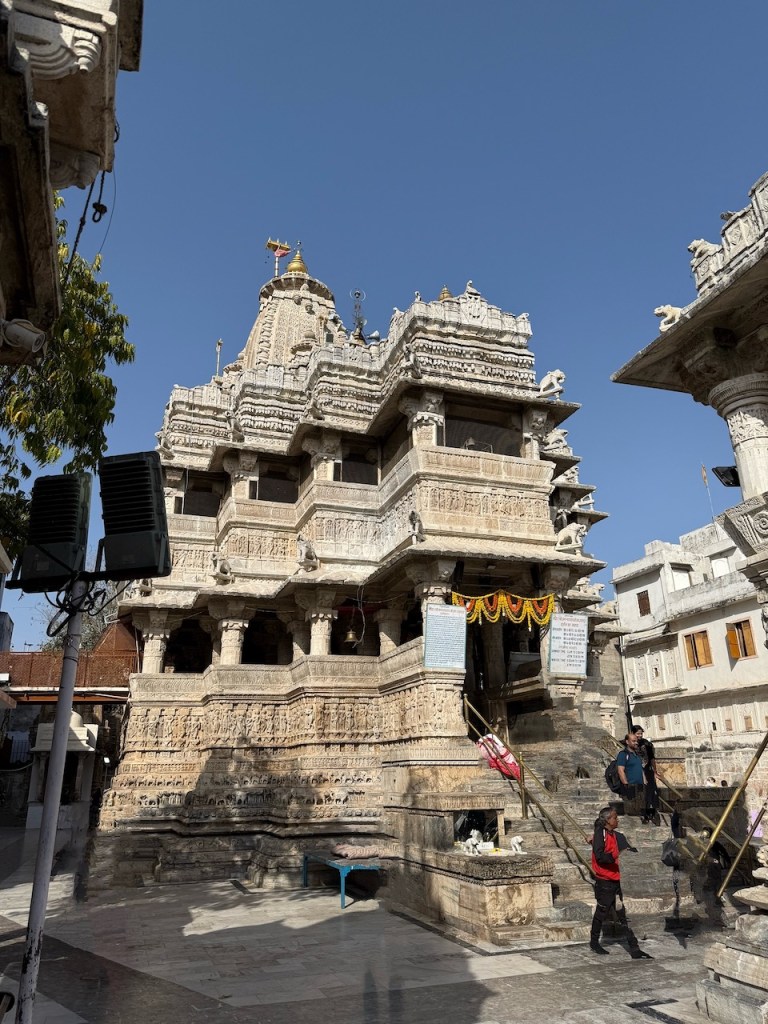
On our second day, we started by visiting the 17th century Jagdish Temple. The intricacies of the carvings were quite amazing, and the overall experience was serene.
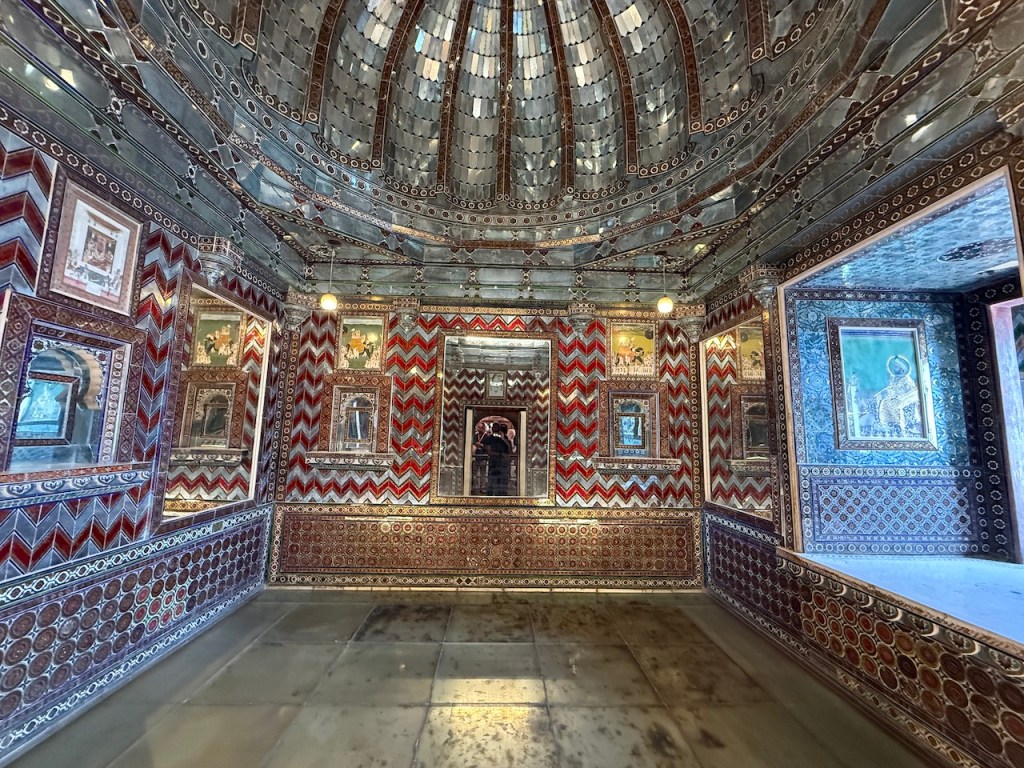
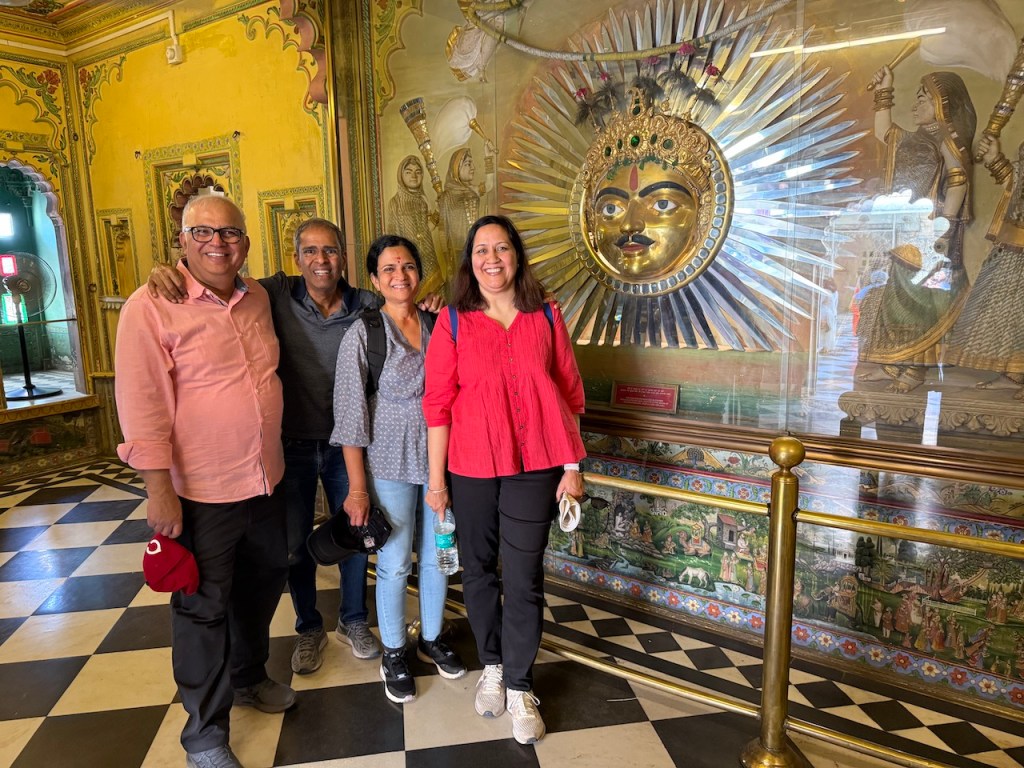
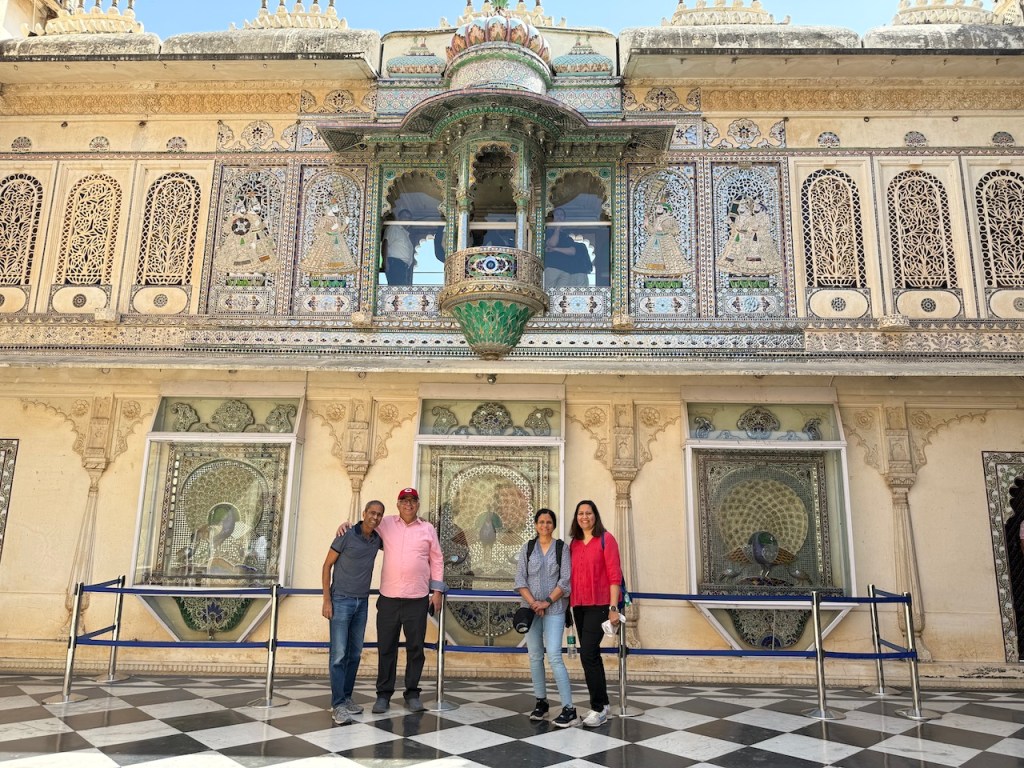
Next we visited the City Palace, a 16th century construction. We took a guided tour of the palace. The guide explained the history of the palace and the use of the various rooms and courtyards.
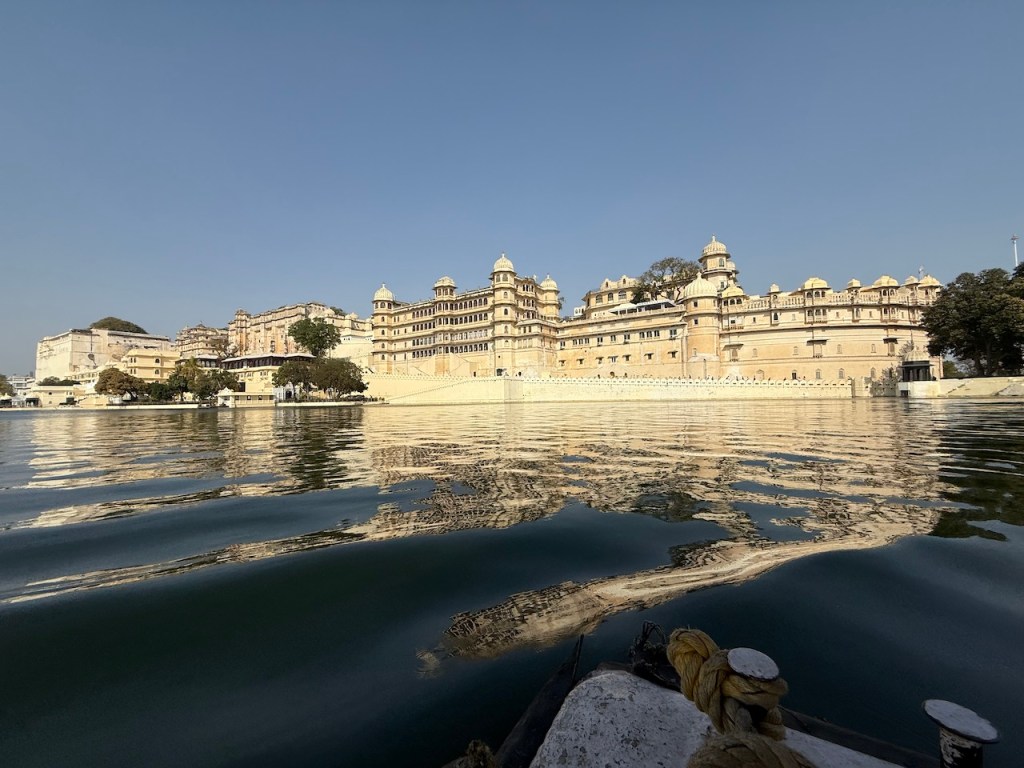
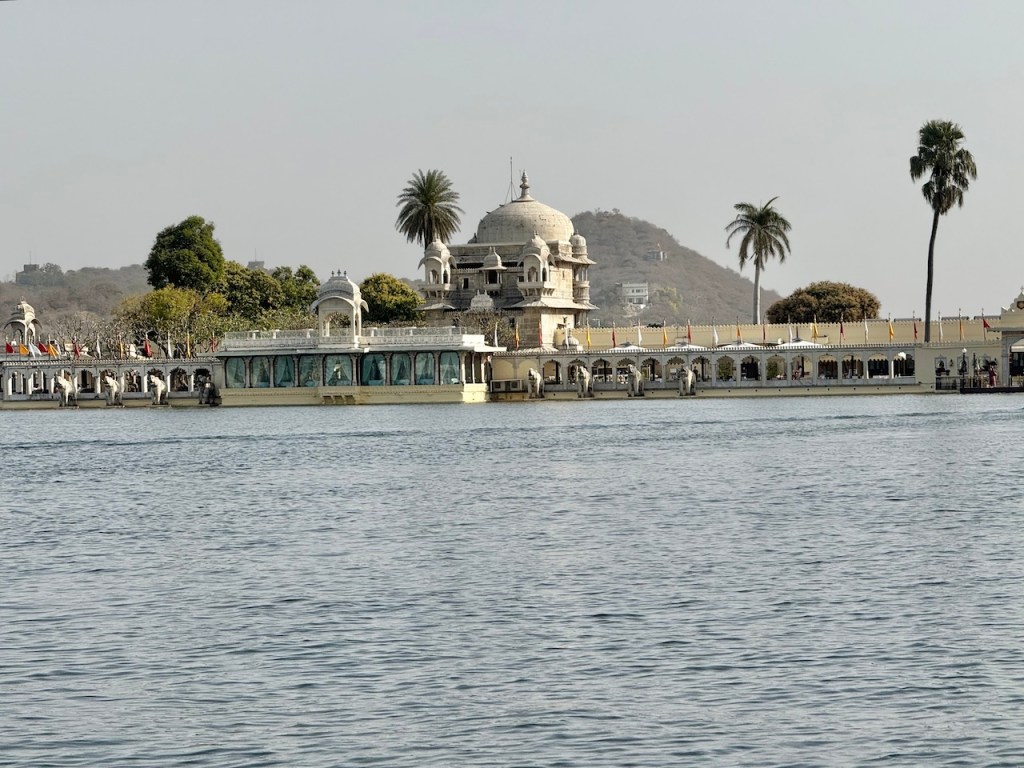
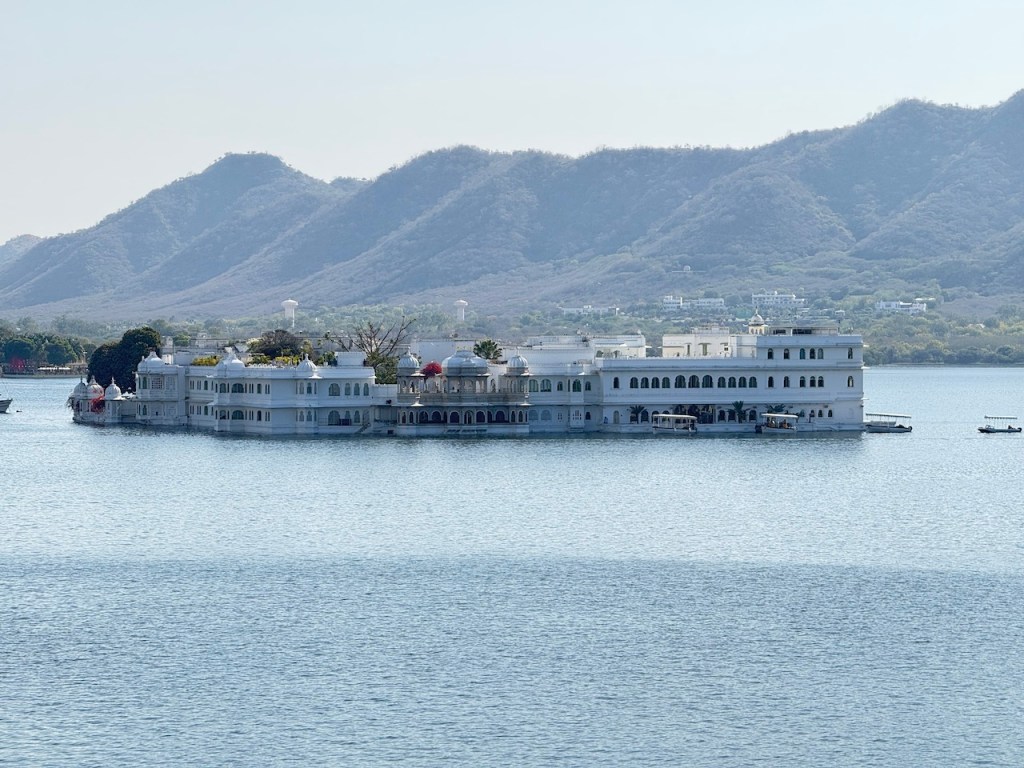
Our last trip of the day was a boat ride to the Jagmandir Palace, which is situated on an island. On the boat ride on Lake Pichola one sees various pretty constructions in this historical city.
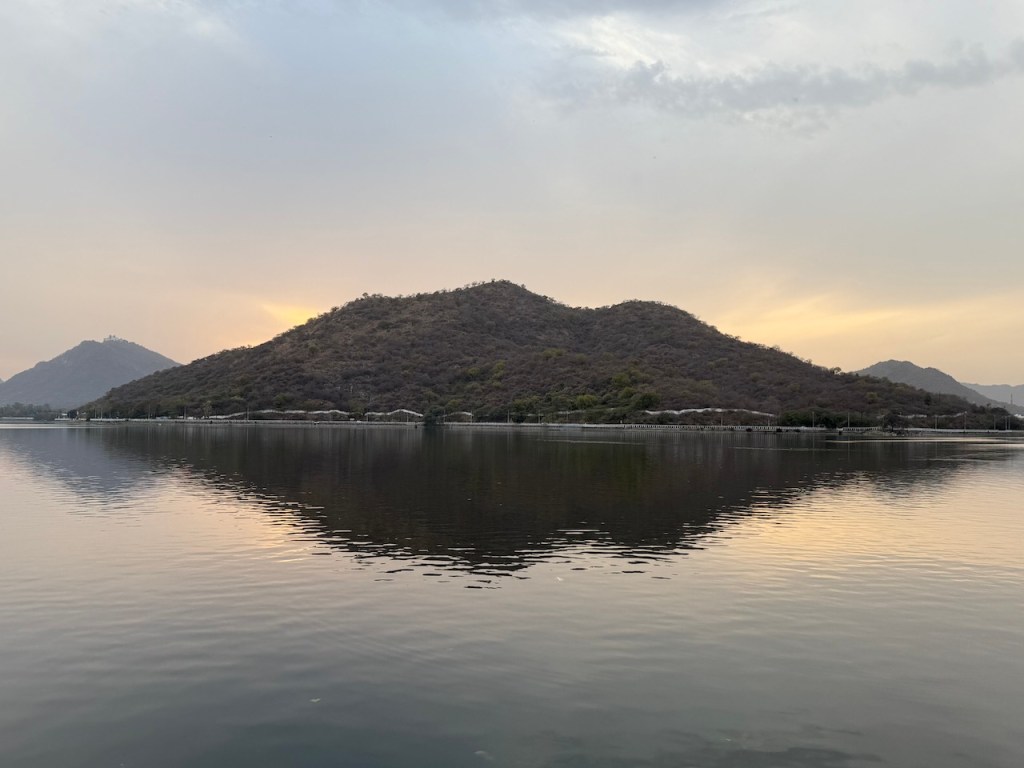
We ended our second day watching the sun set over the Aravalli mountains and Lake Fateh Sagar.
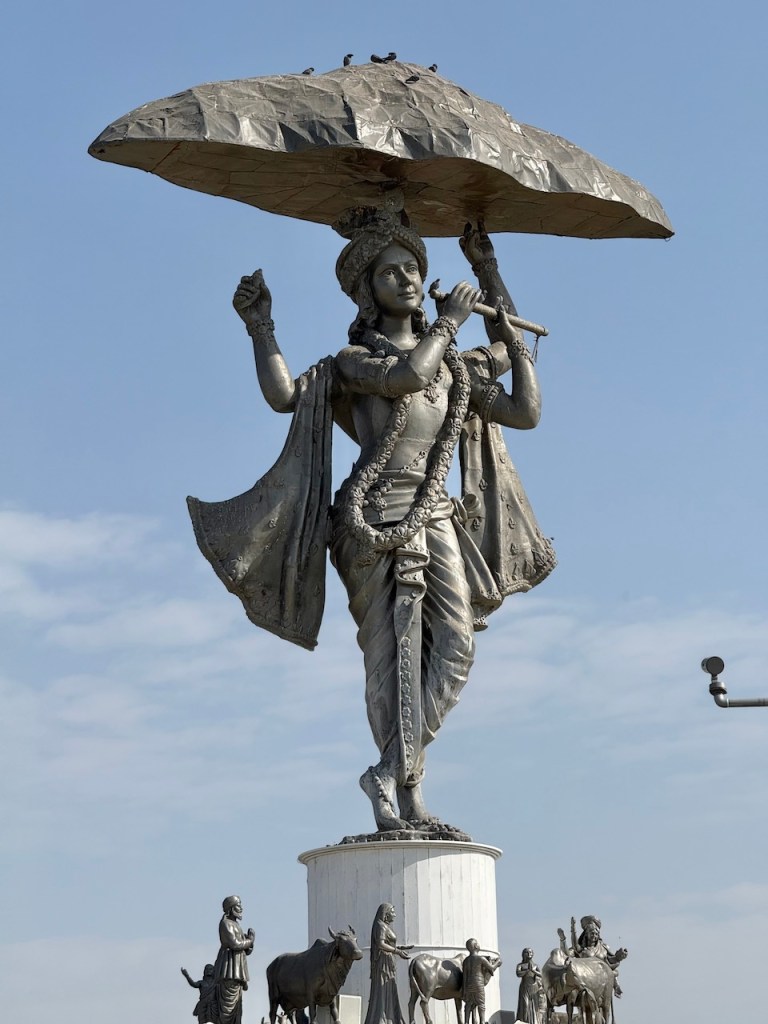
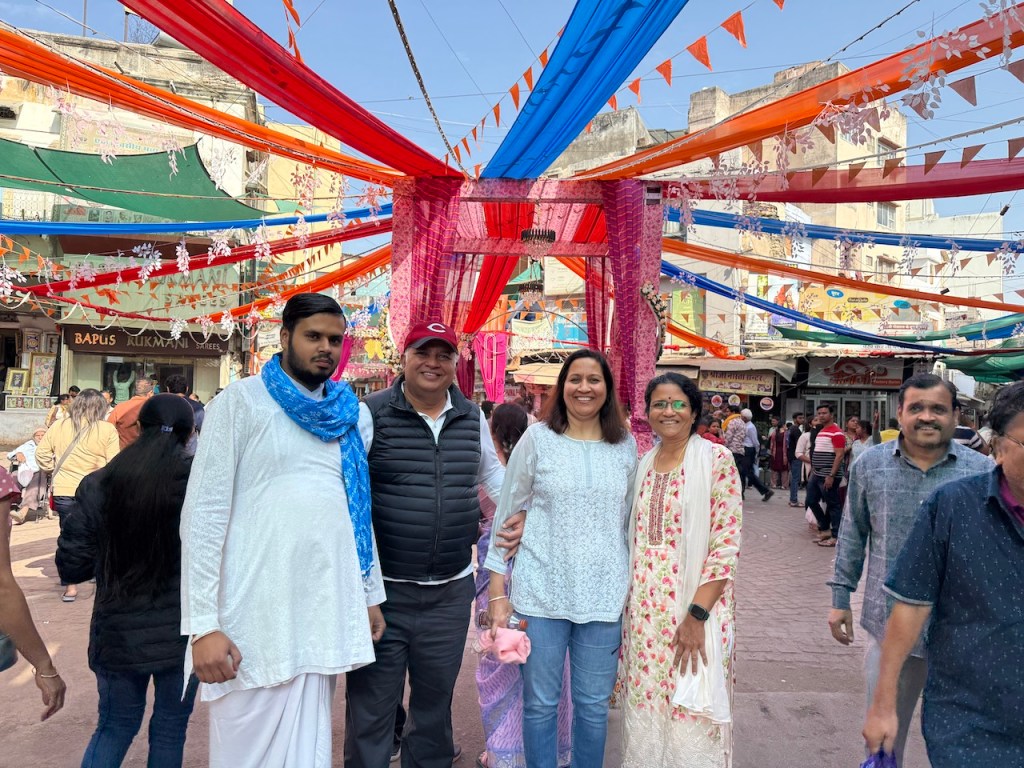
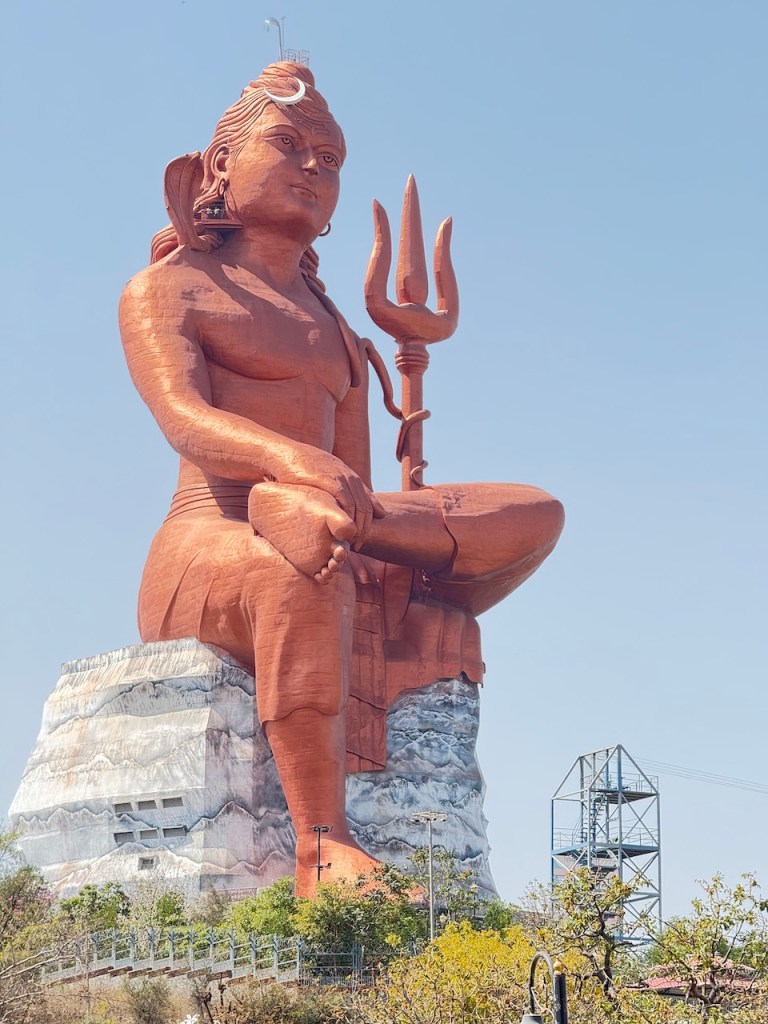
Day 3 started with a drive to Nathdwara, where the famous Shrinathji temple is located. The drive was about an hour, and the roads were not congested. We had booked for a darshan for 11 am, but had to wait about an hour. Apparently February is not the peak season, and waits are much longer in March and April.
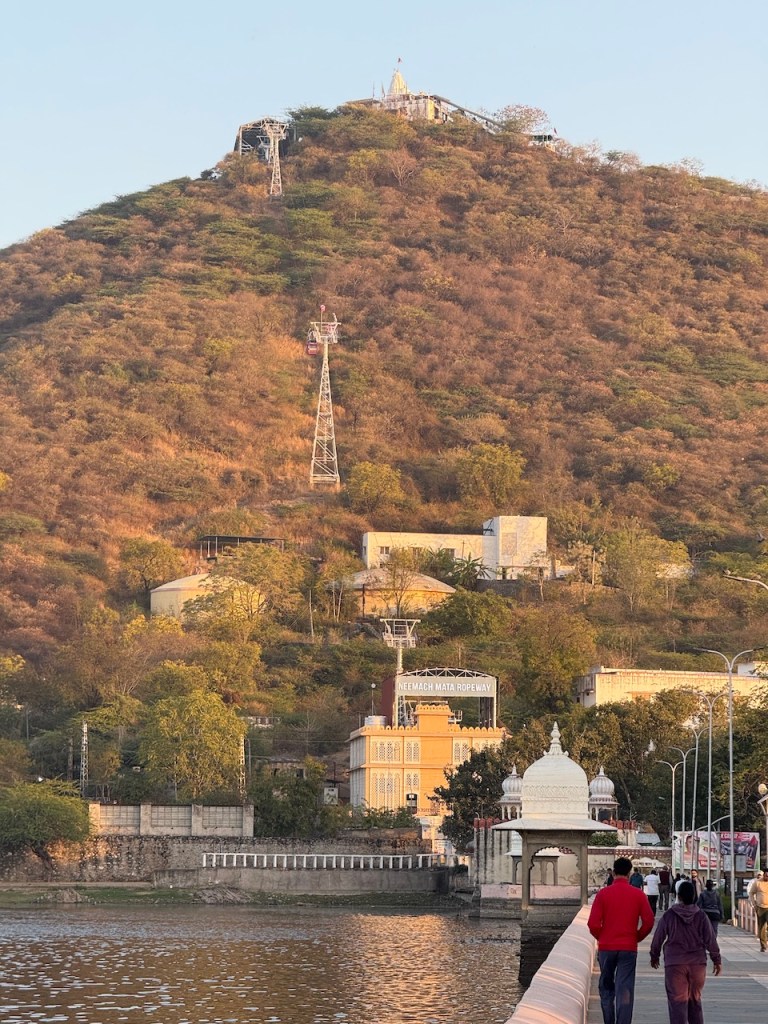
In the evening, we took a cable car to Neemach Mata temple. The temple is on top of a hill, with great views of Fateh Sagar Lake and the Aravalli mountains.
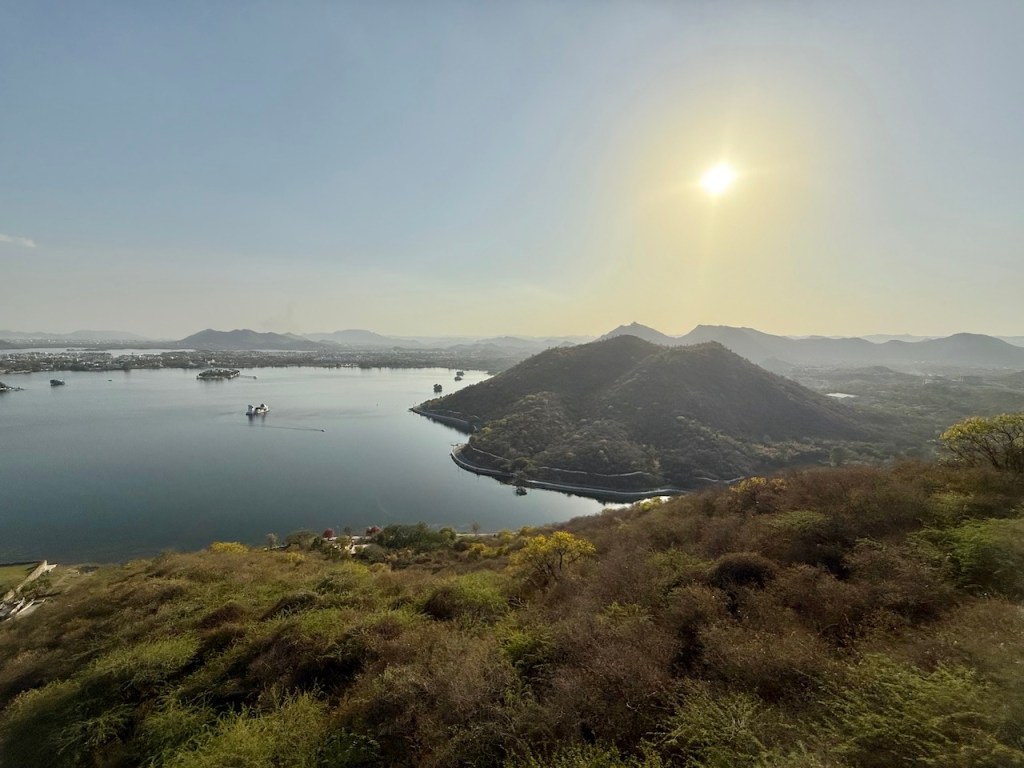
Our last day in Udaipur was hectic with local sightseeing. We first took the cable-car to Mata Karni temple. The views of lake Pichola and Udaipur were great.
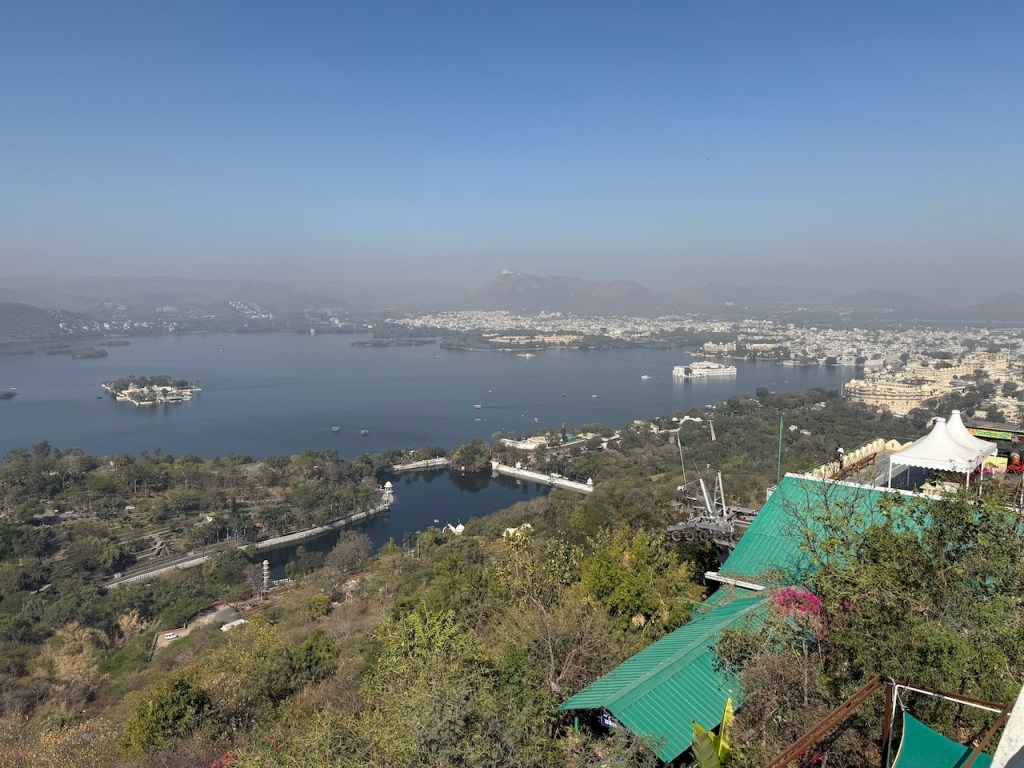
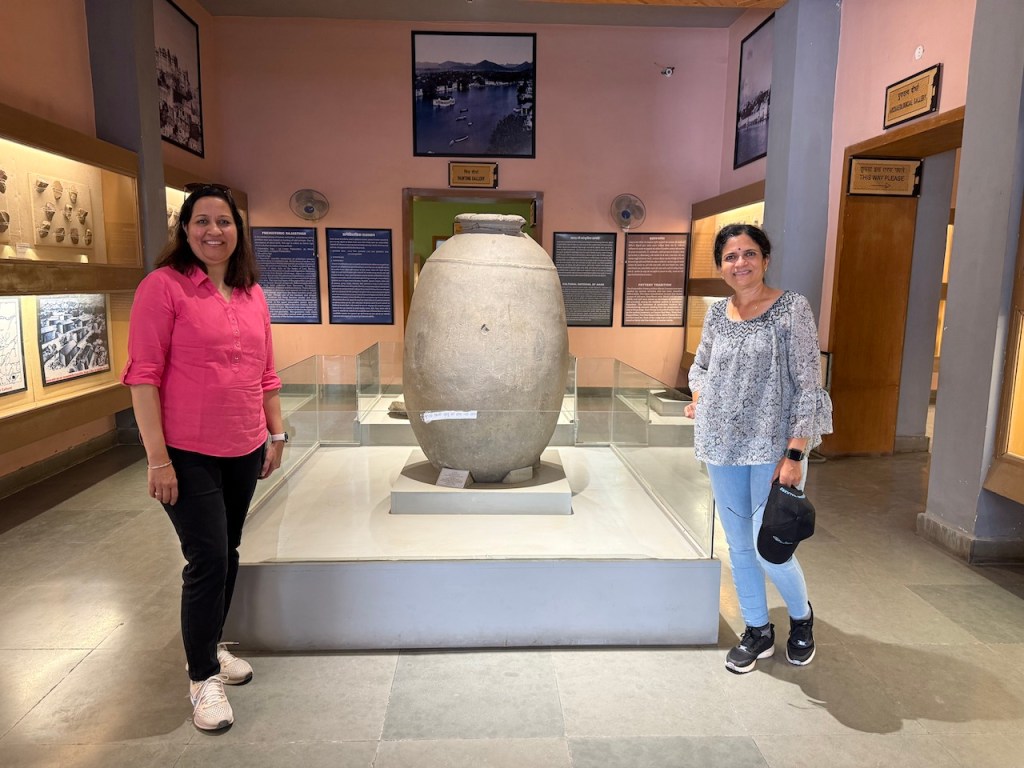
Next we visited the Ahar museum, which has artifacts from prehistoric times to medieval times.
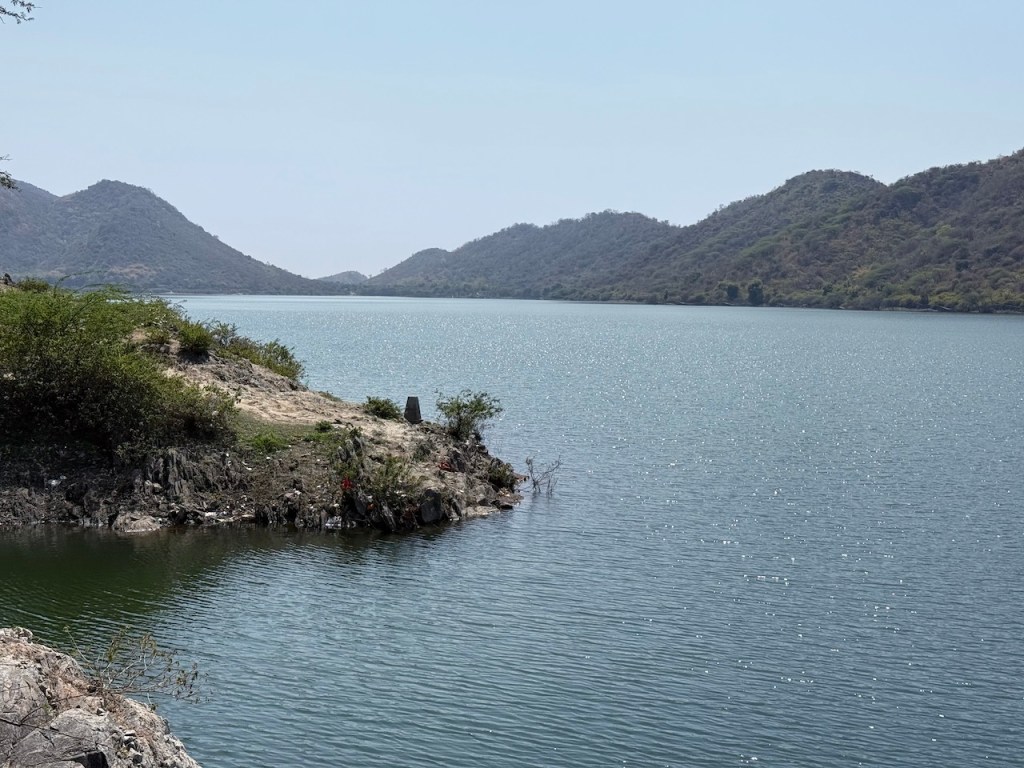
We then drove to Bahubali hill, with great views of Badi Lake. There is a short trek possible to the summit of Bahubali hill.
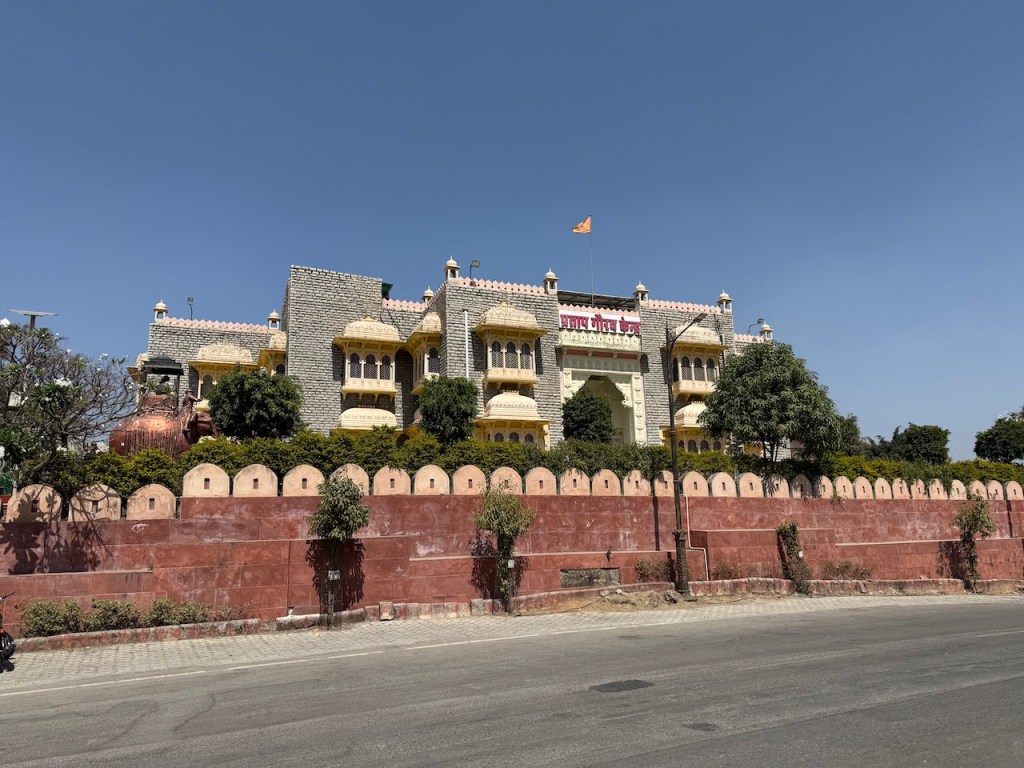
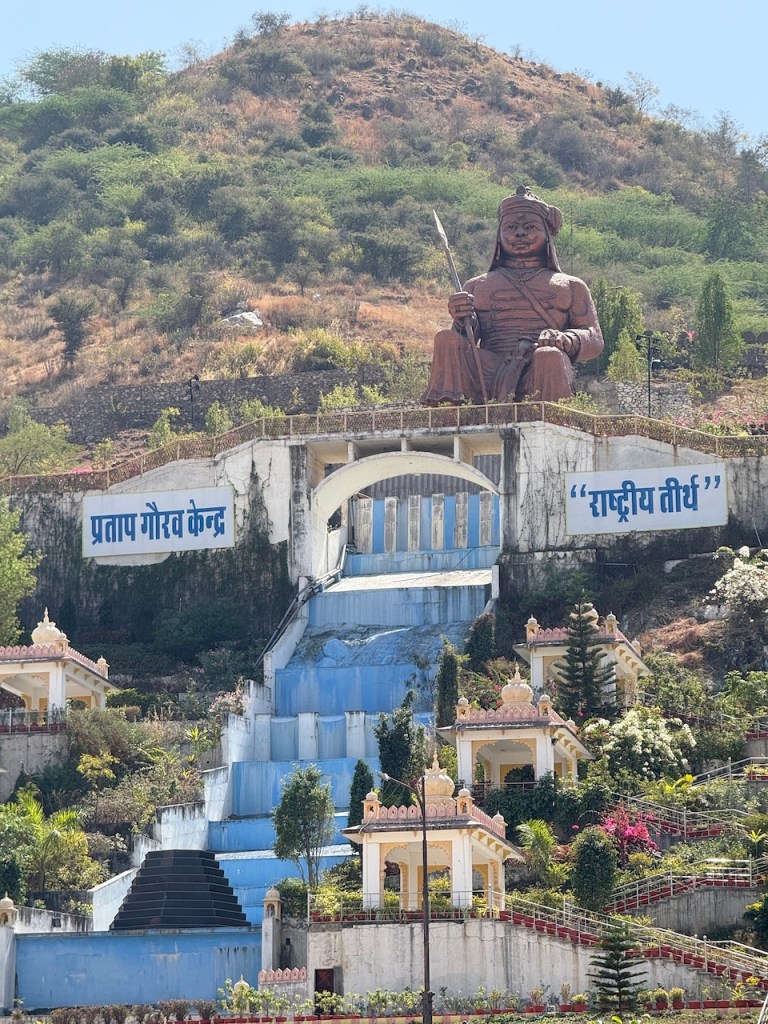
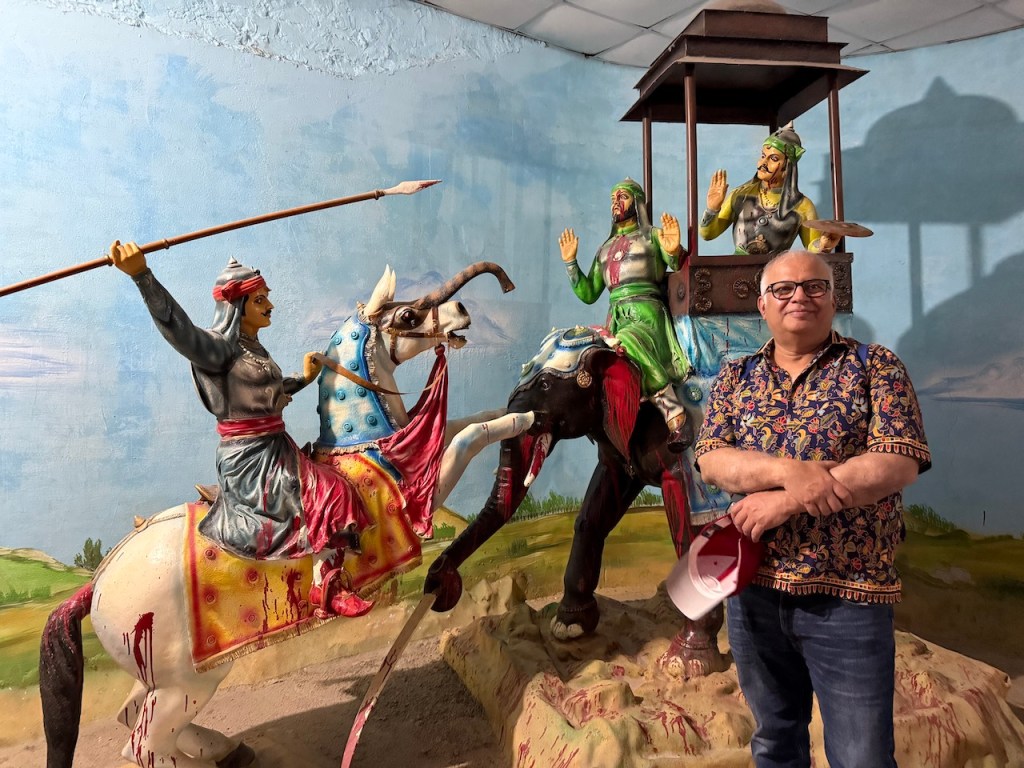
Our next stop was the Pratap Gaurav Kendra museum. It depicts the history of Maharana Pratap Singh. He is one of the most famous kings from Rajasthan. The tour was guided and there were 4 shows depicting the wars between the Mughals and the Rajputs.
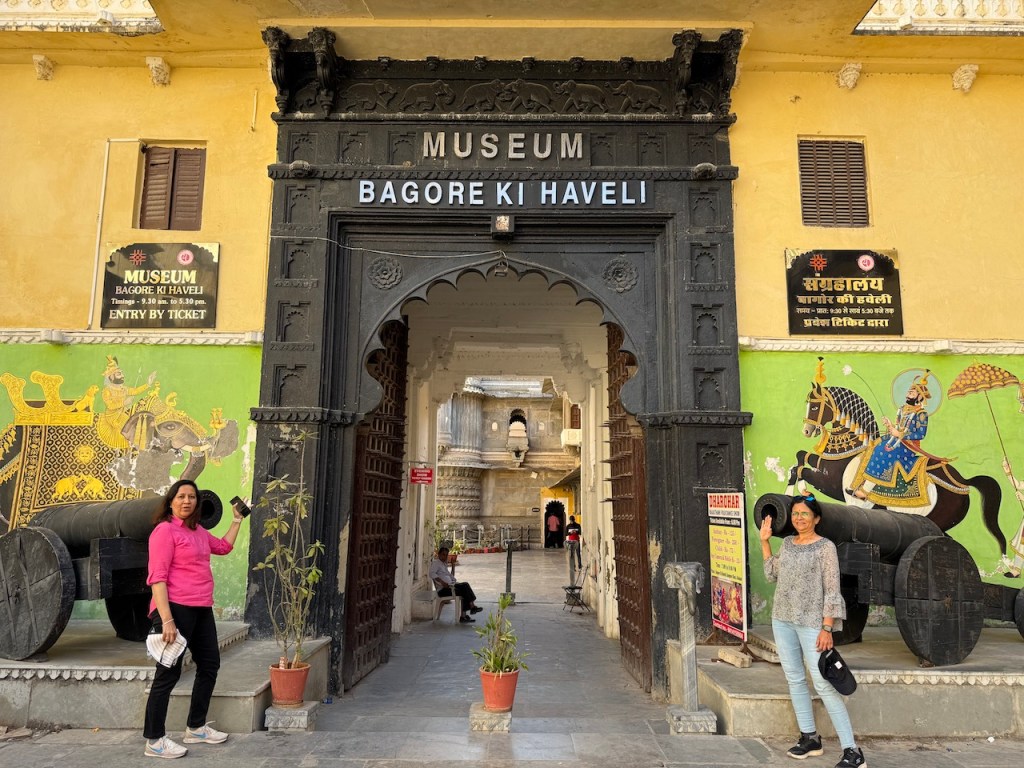
Post lunch, our last stop was Bagore Ki Haveli in Udaipur old Town. This is a 18th century palace built by the prime minister of the region. Over the past 40 years this place has been renovated and now houses many artifacts about the rich Rajputs history.
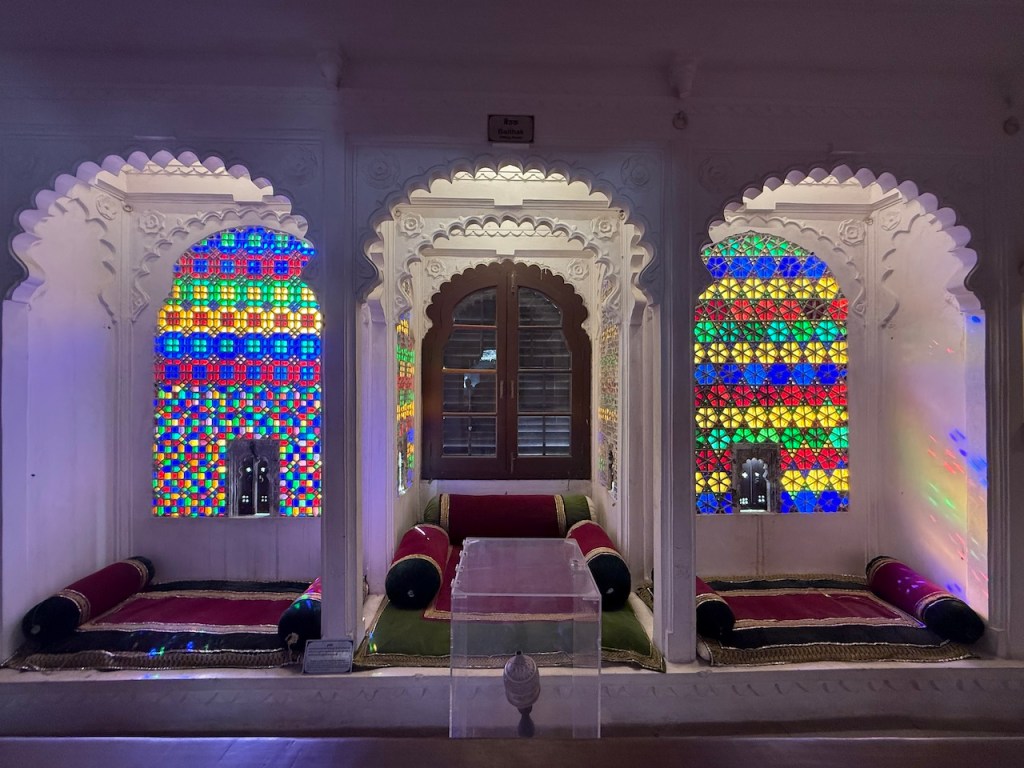
In summary, the trip to Udaipur was amazing. The weather in February was nice, though slightly hot in afternoons. Four days is a decent amount of time to explore Udaipur without rushing. The city infrastructure was great, and the city was generally quite clean.
Up next … Jodhpur!
The drive from Udaipur to Jodhpur was about 5 hours. The roads were good, and traffic was light.
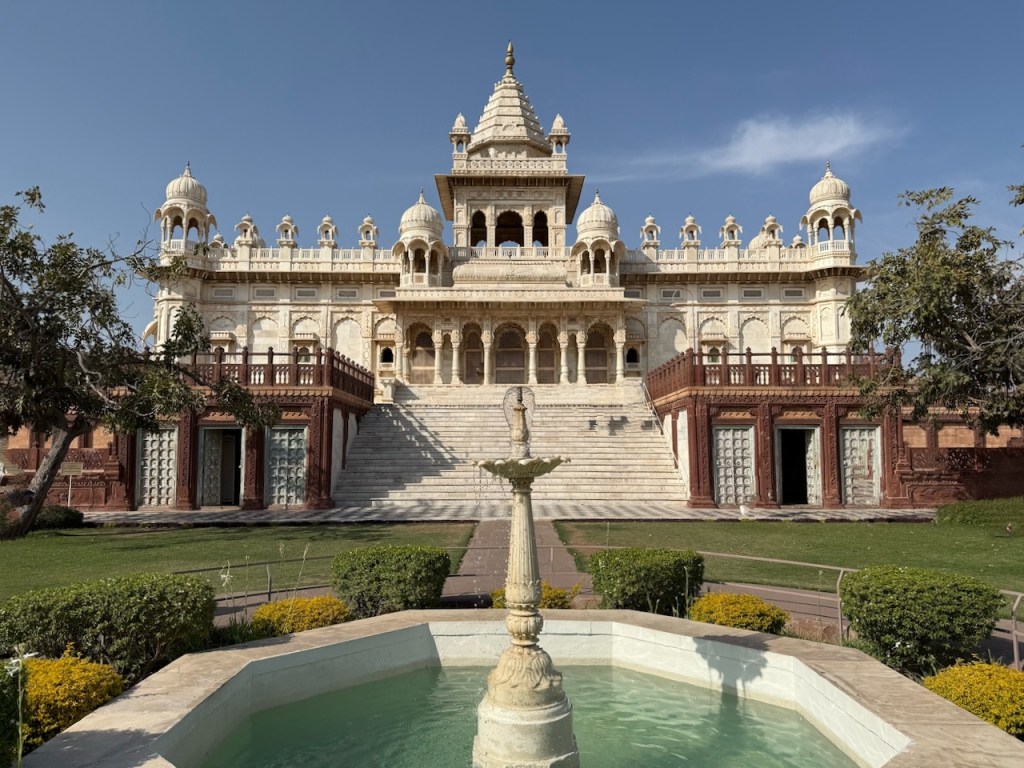
Our first visit in Jodhpur was to Jaswant Thada, a cenotaph in memorial of a former king Maharajah Jaswant Singh. There are other cenotaphs on the ground.
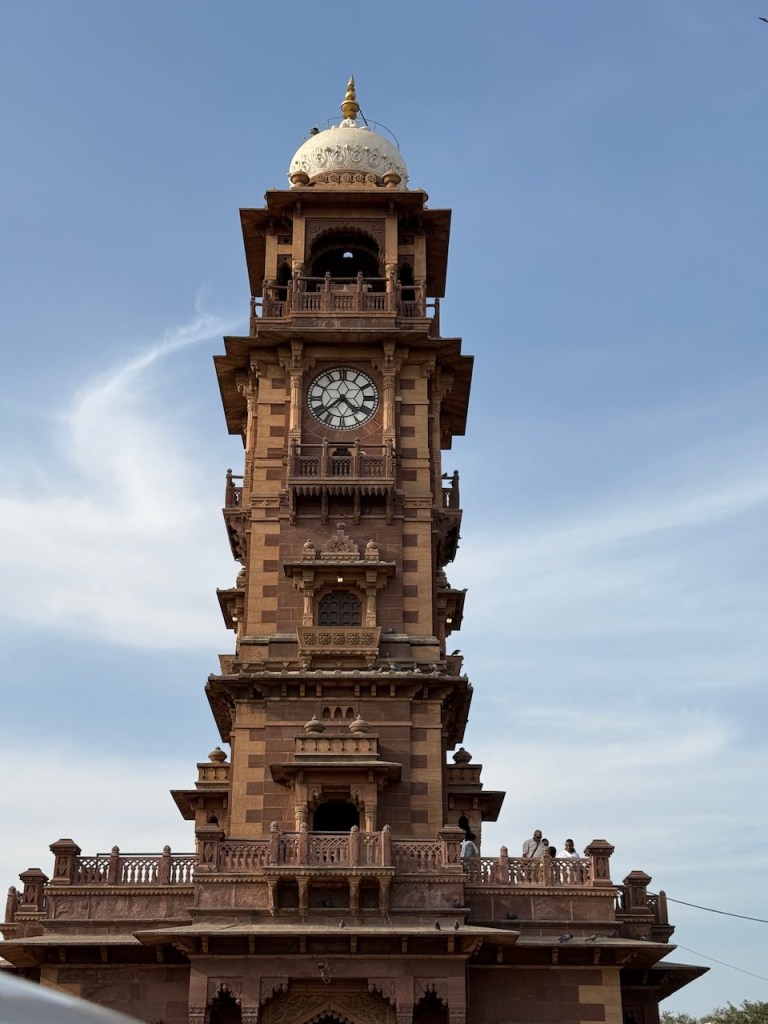
Next we visited the old town in Jodhpur, where the clock tower built in 1910 is situated.
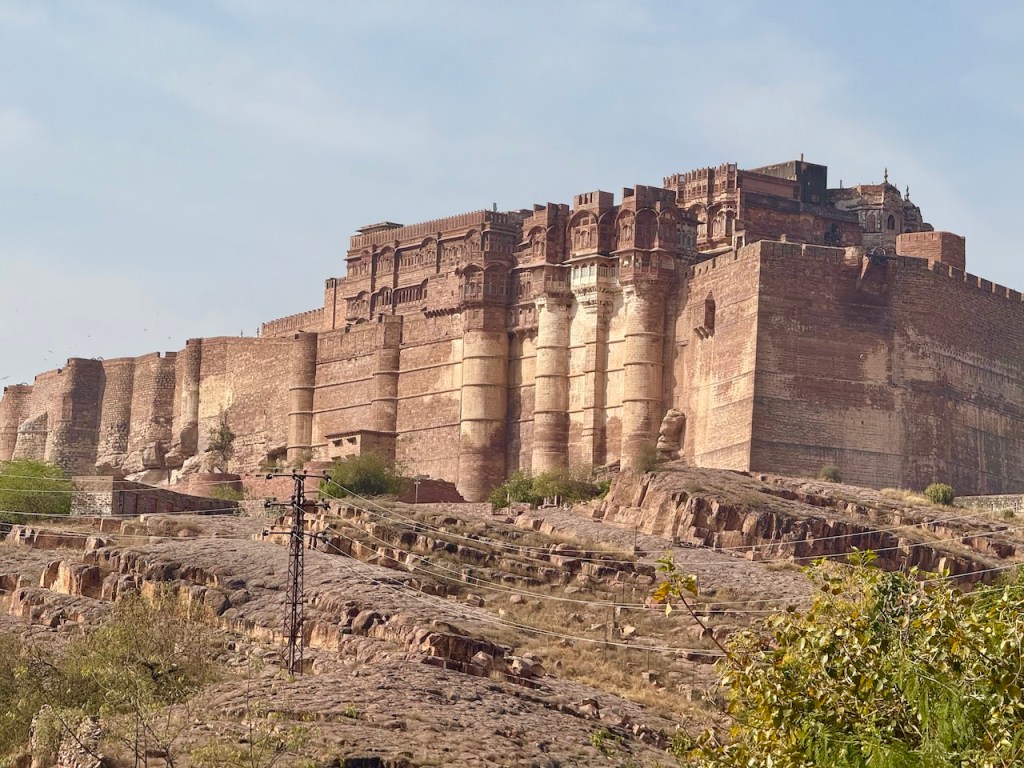
The next morning we visited the Mehrangarh Fort. Its was originally built in the 15th century, with additions in the 17th century. Today, it’s converted into a museum with elaborately decorated rooms.
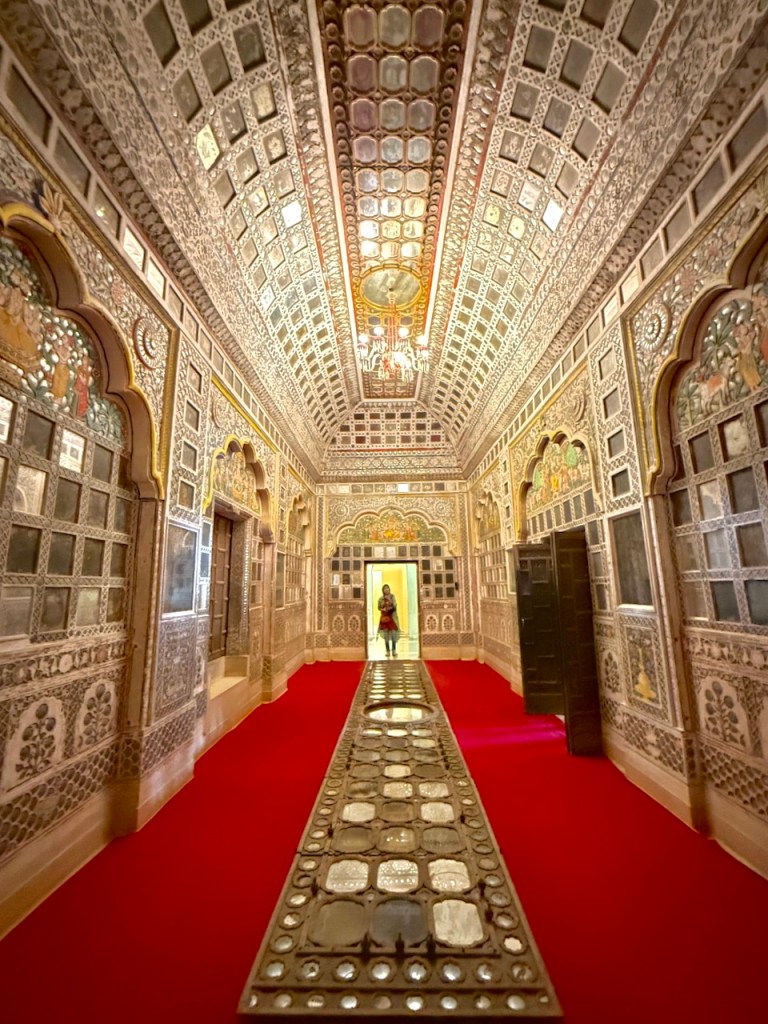
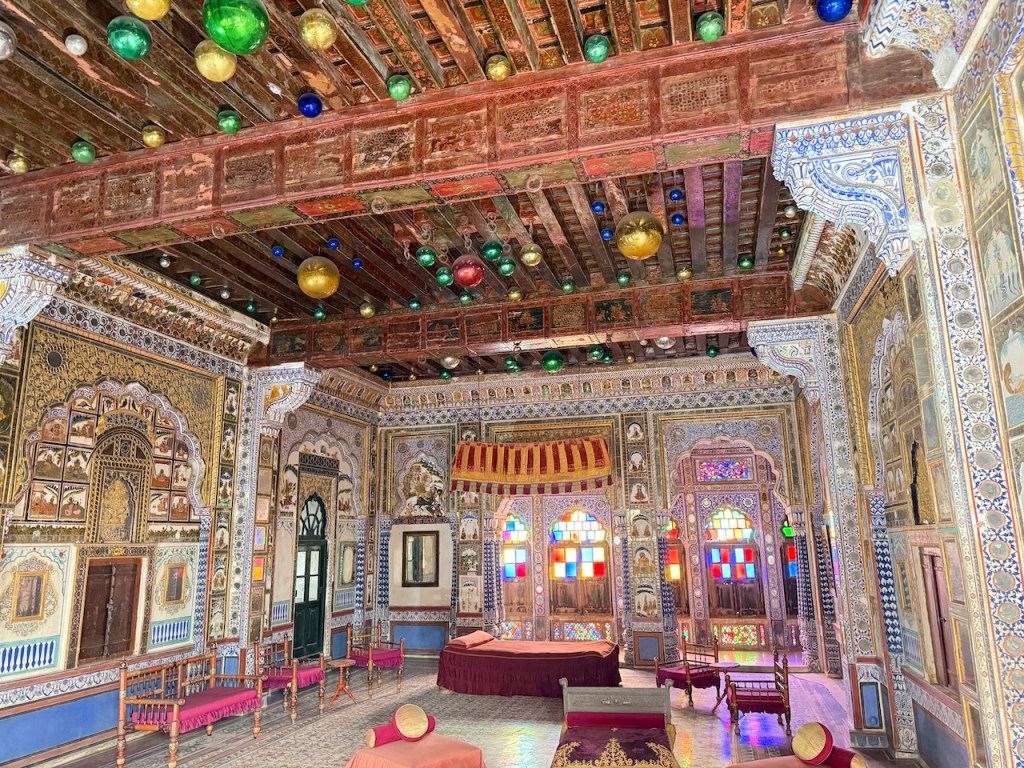
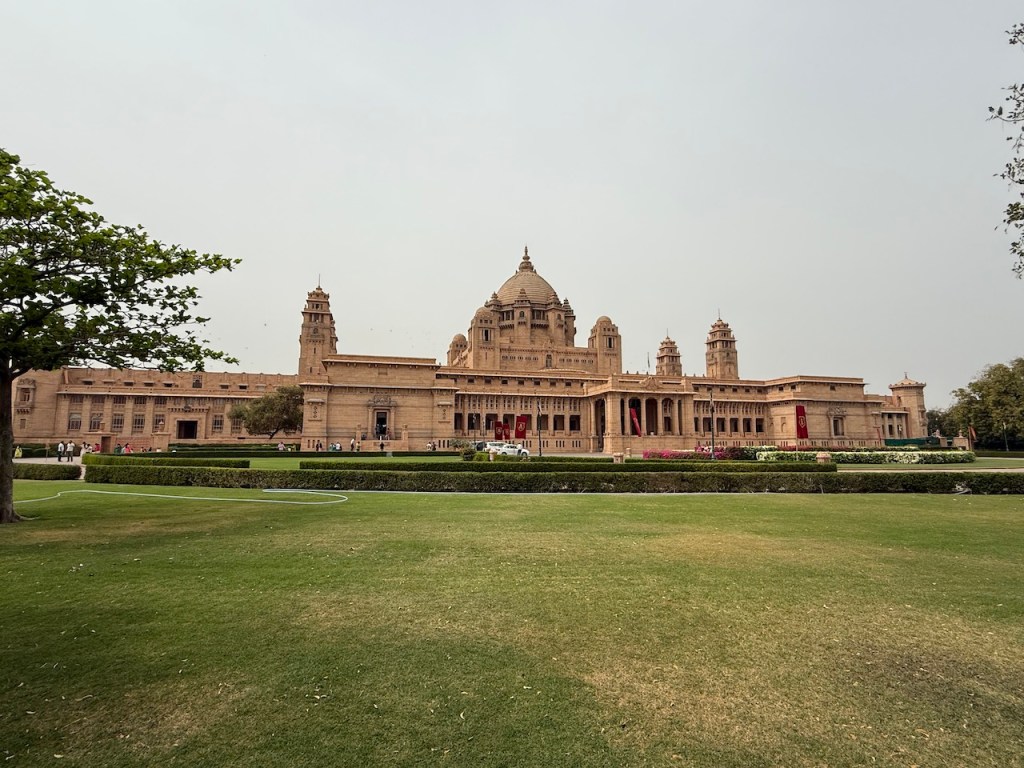
Our next visit was to the Umaid Bhawan Palace. It is one of the largest private residences in the world. It is the place of residence of the former Jodhpur royal family. A large part of the palace is now run as a hotel by the Taj group. One wing houses the museum, principally showcasing the life of Umaid Singh and his family. Umaid Singh built this palace in 1943.
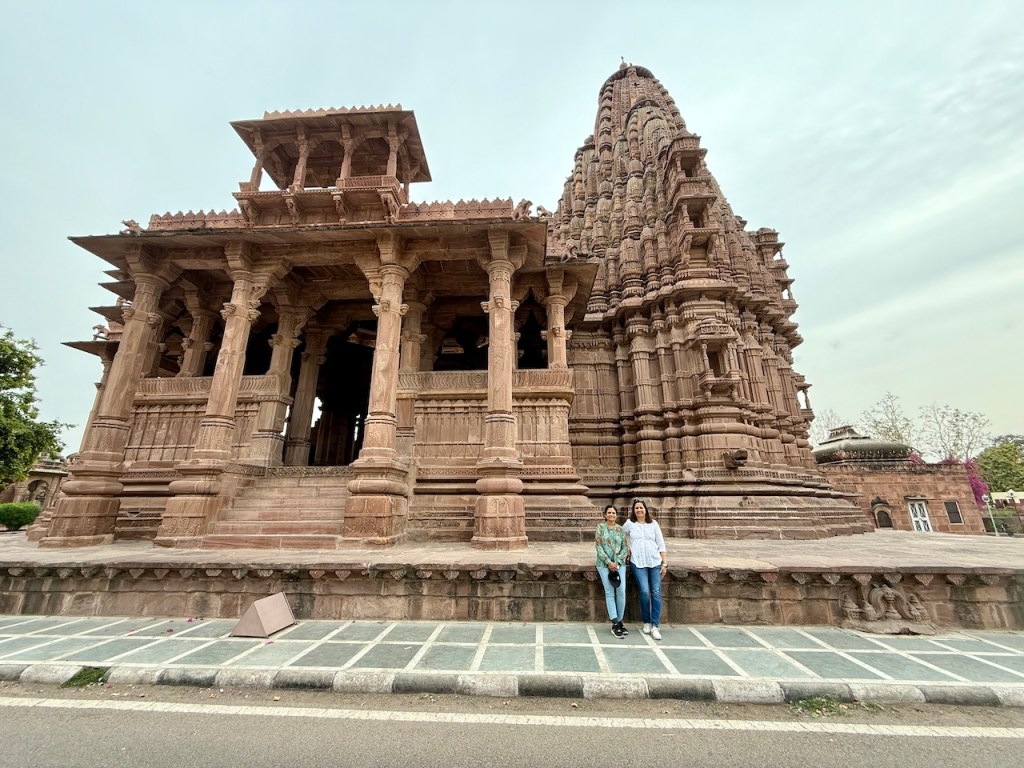
Our last visit in Jodhpur was to the Mandore garden, which has a lot of history. The garden is large, and consists of many cenotaphs.
We spent 1.5 days in Jodhpur, which is enough time to explore the main attractions in the city.
Up next … Jaisalmer
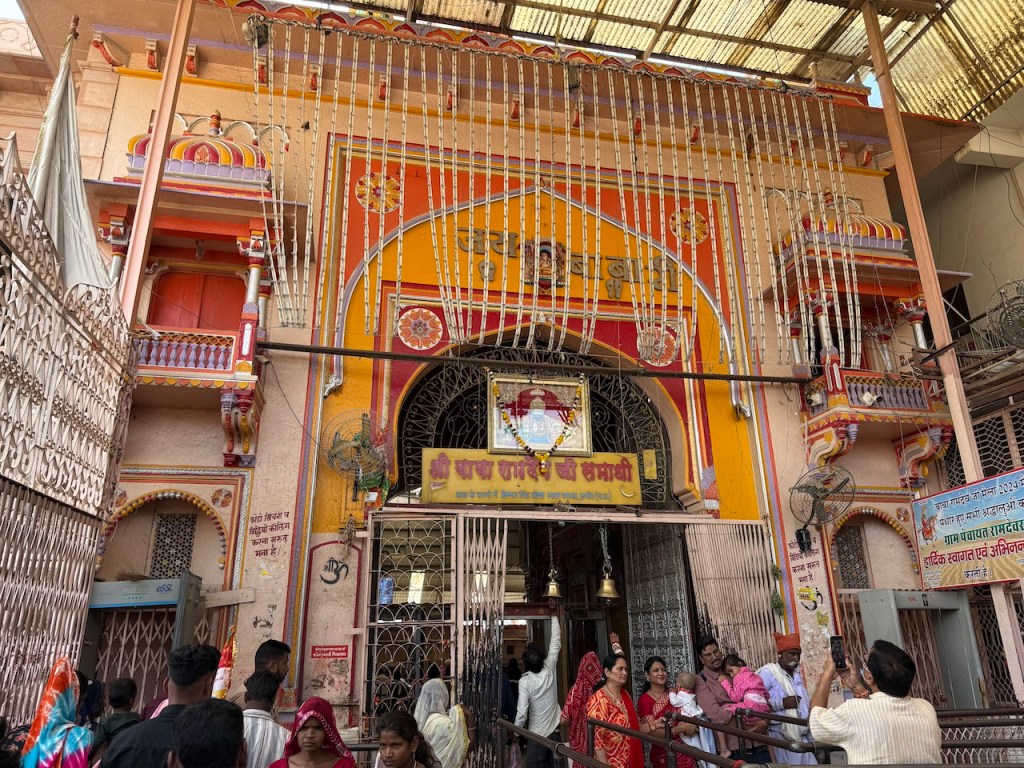
On route from Jodhpur to Jaisalmer, we stopped at Baba Ramdevji temple. Baba Ramdevji is a 15th century poet and saint, who attained Samadhi at the age of 33. He is highly revered by people in the states of Rajasthan and Gujarat.
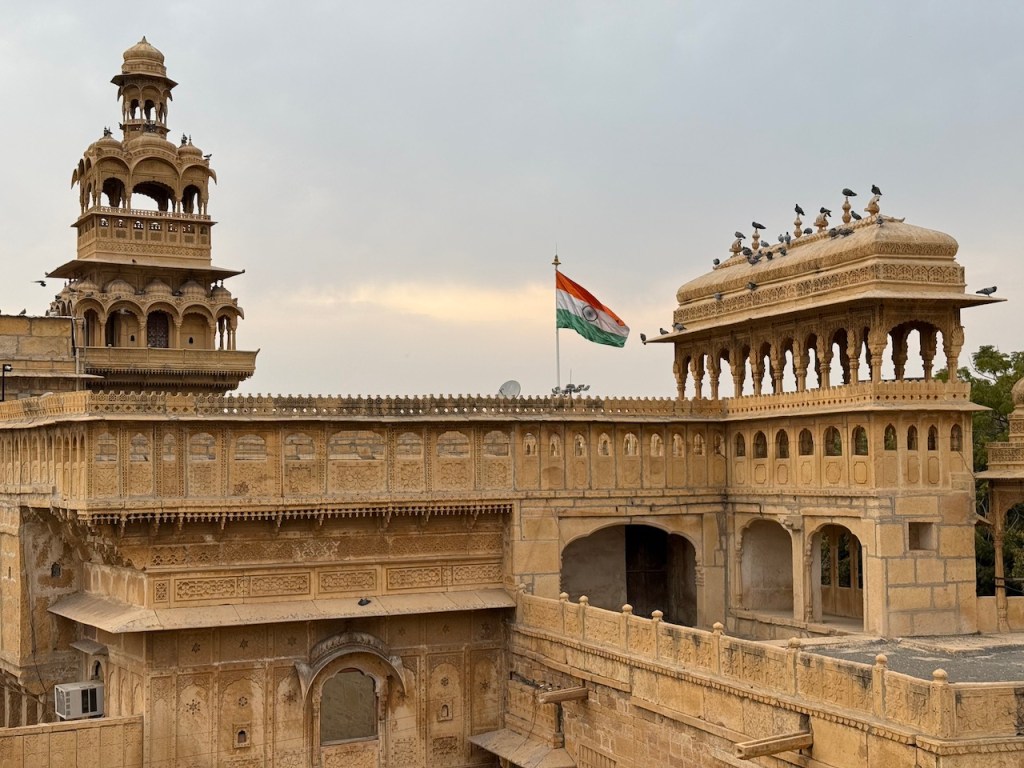
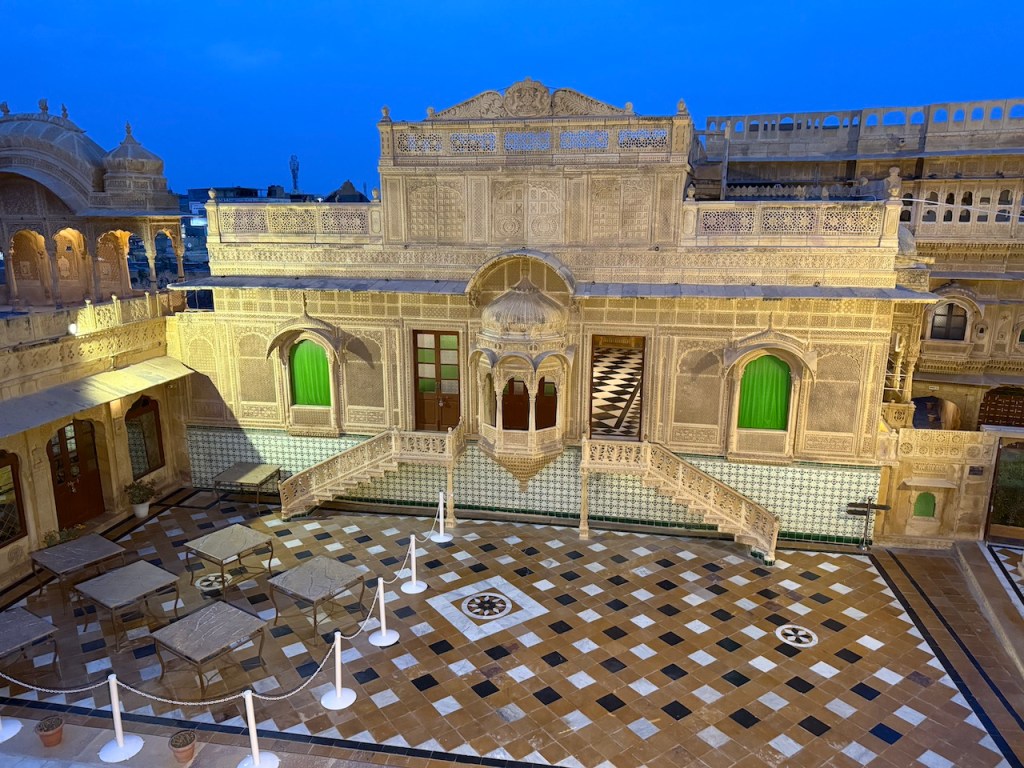
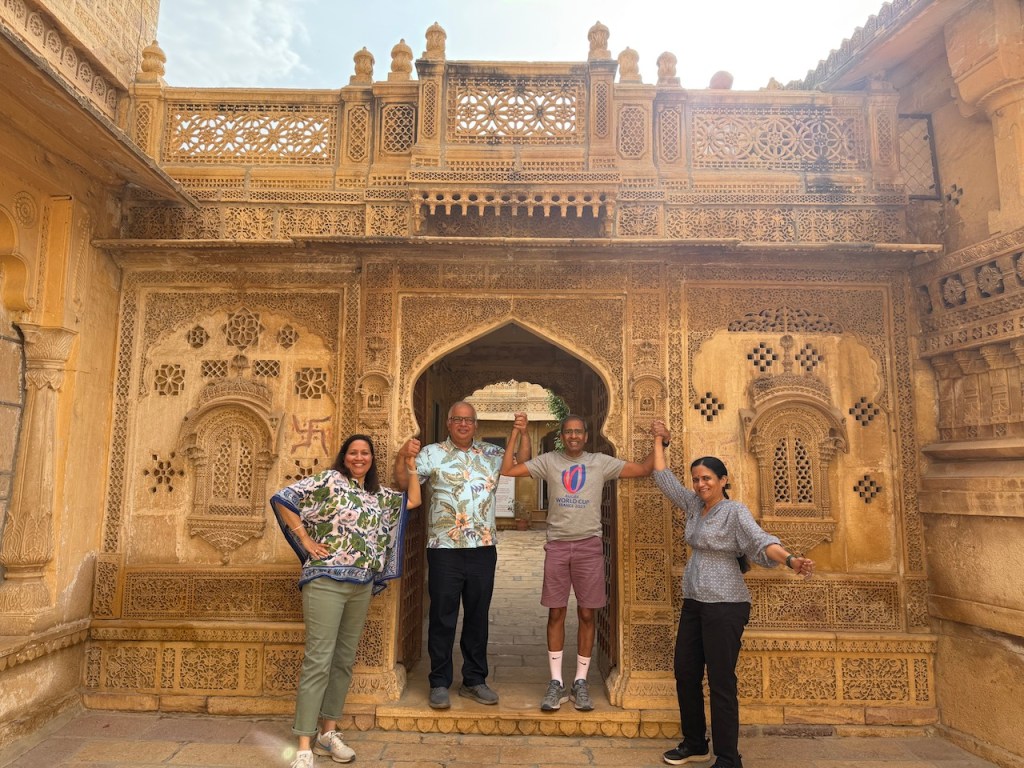
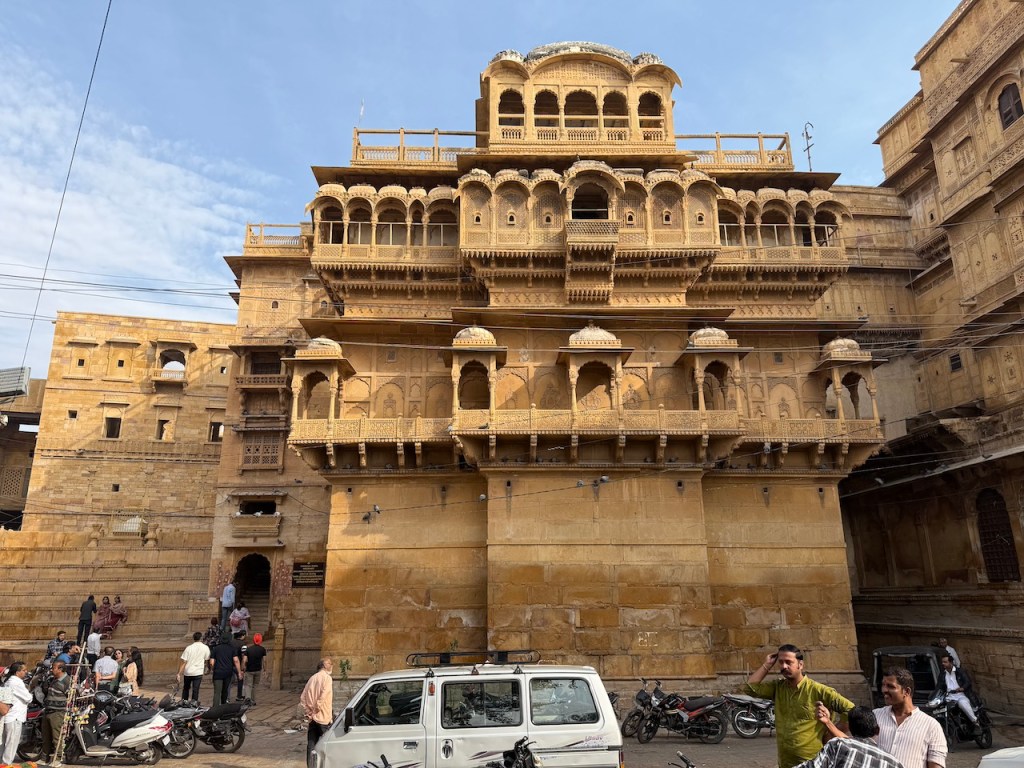
We spent 3 nights in Jaisalmer at Mandir Palace Hotel, which is located in the city centre. The Palace was built about 200 years ago, and has been transformed over generations. There are many ornate balconies, nice gardens, two museums and stone carvings.
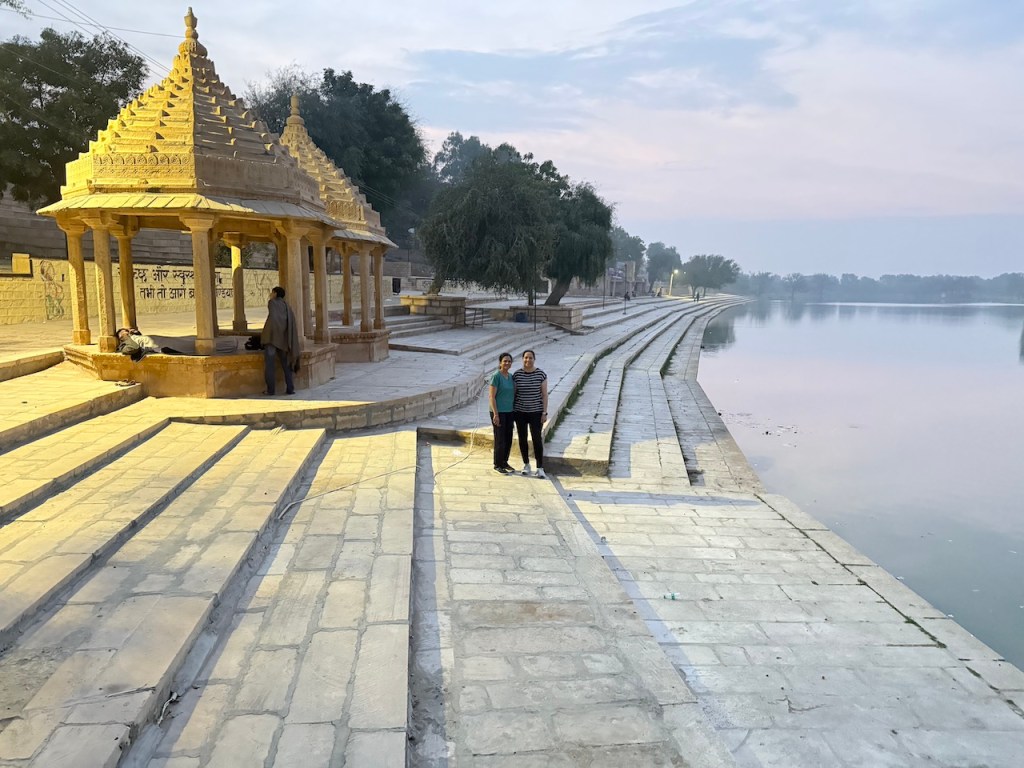
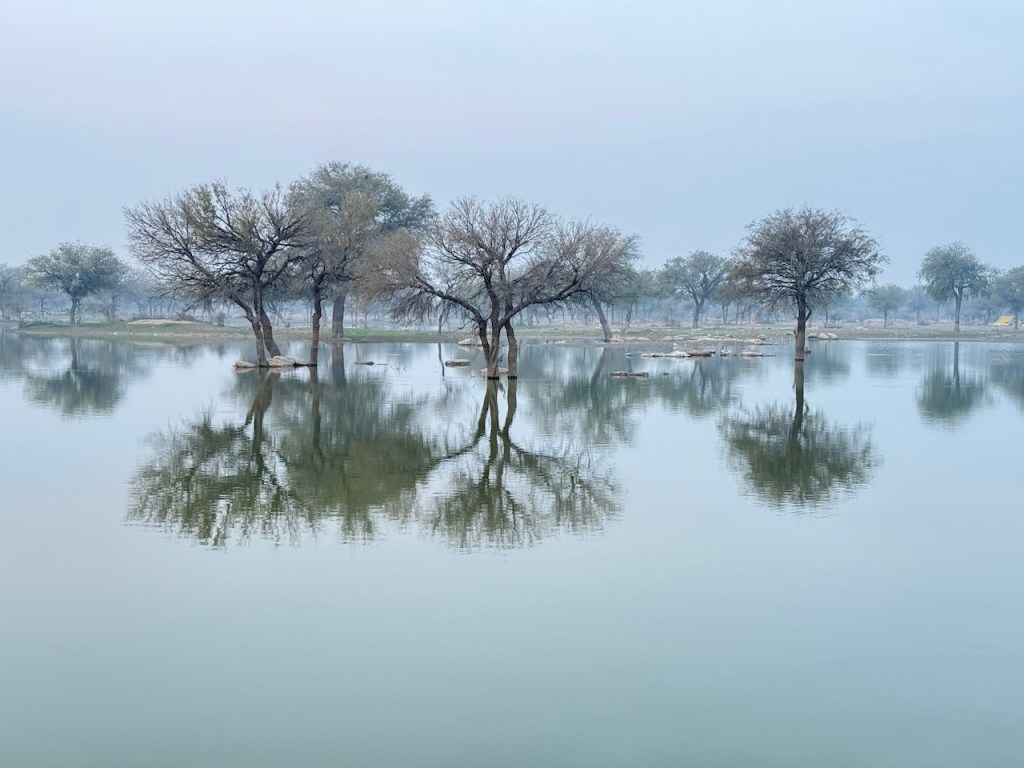
On our second day, we walked to the nearby Gadisar Lake. While the paths were dirty, the ornate architecture around the lake were nice. Also we saw a lot of bird life, including Swans, Herons, Stilts, Lapwings etc.
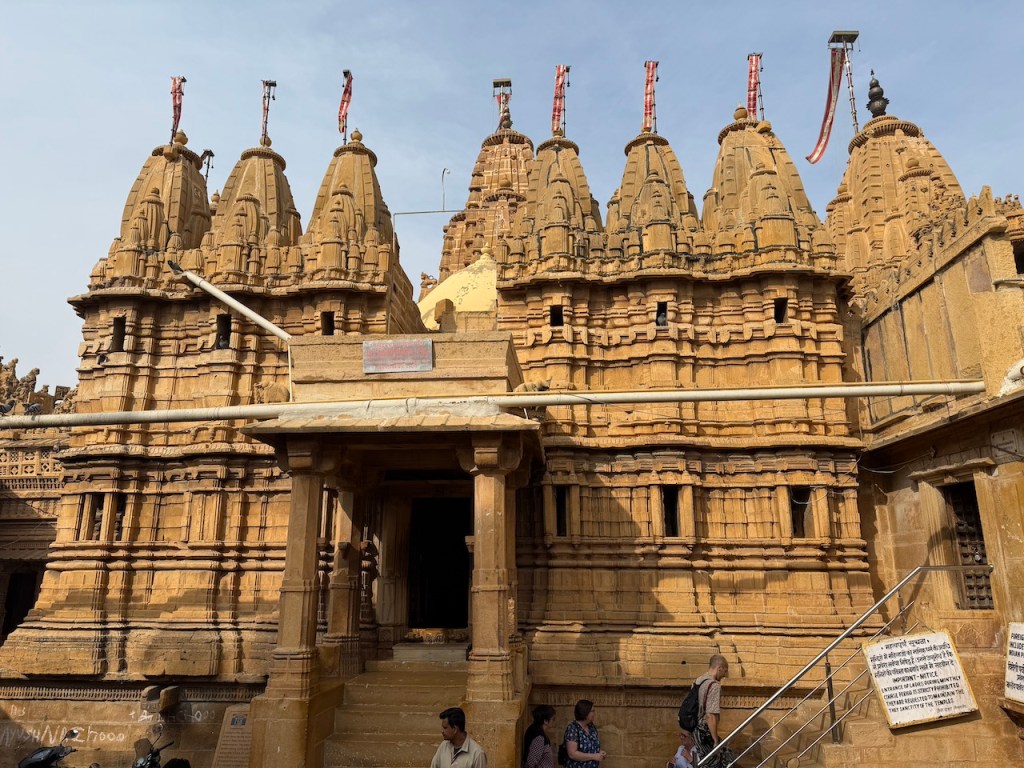
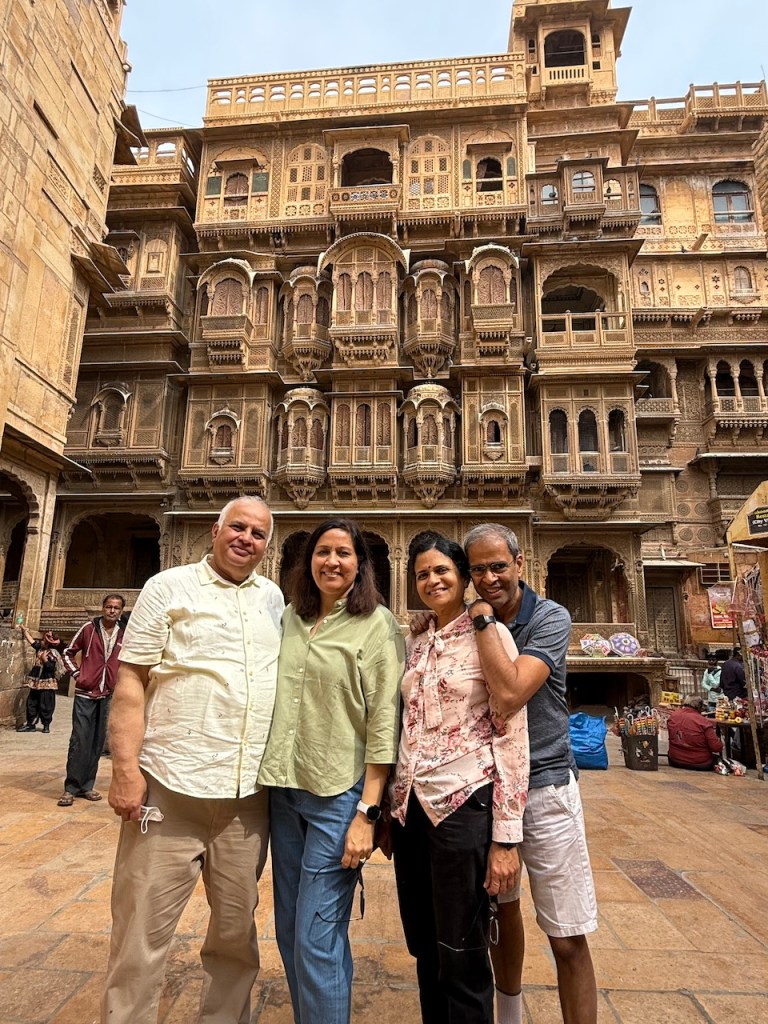
Later in the morning, we visited the Jaisalmer fort. There are a lots of temples near the fort, which have intricate carvings and a rich history.
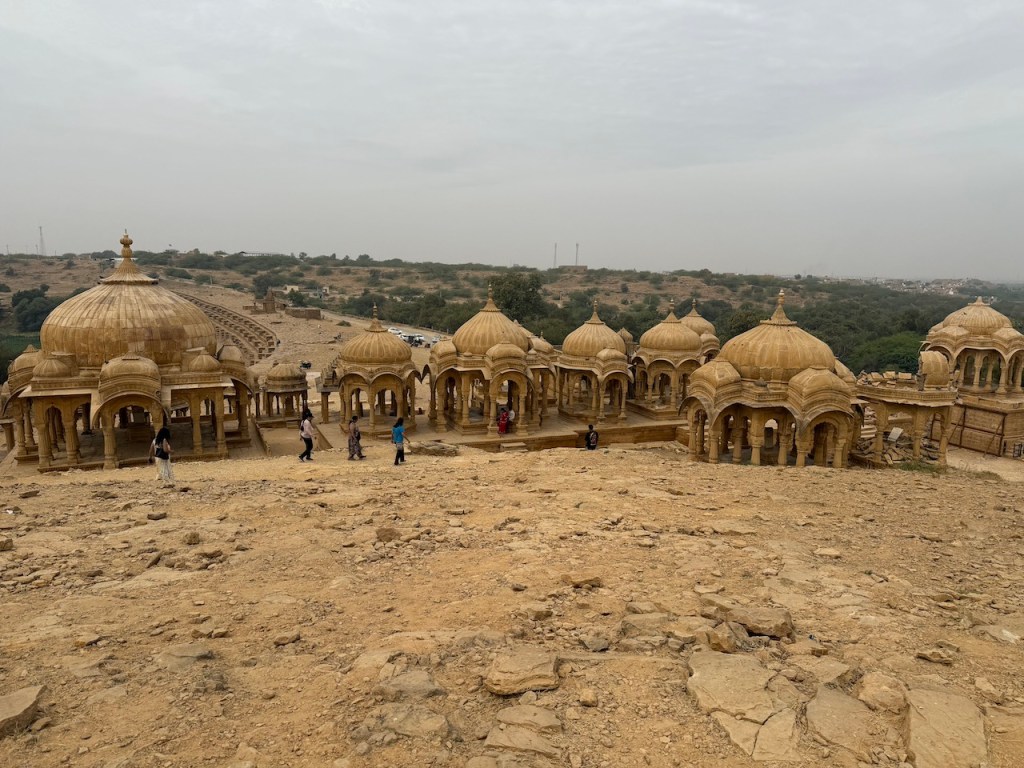
In the afternoon we visited Bada Bagh, which has cenotaphs in memorial of the royal family. The cenotaphs have been built from the 18th century till the 20th century.
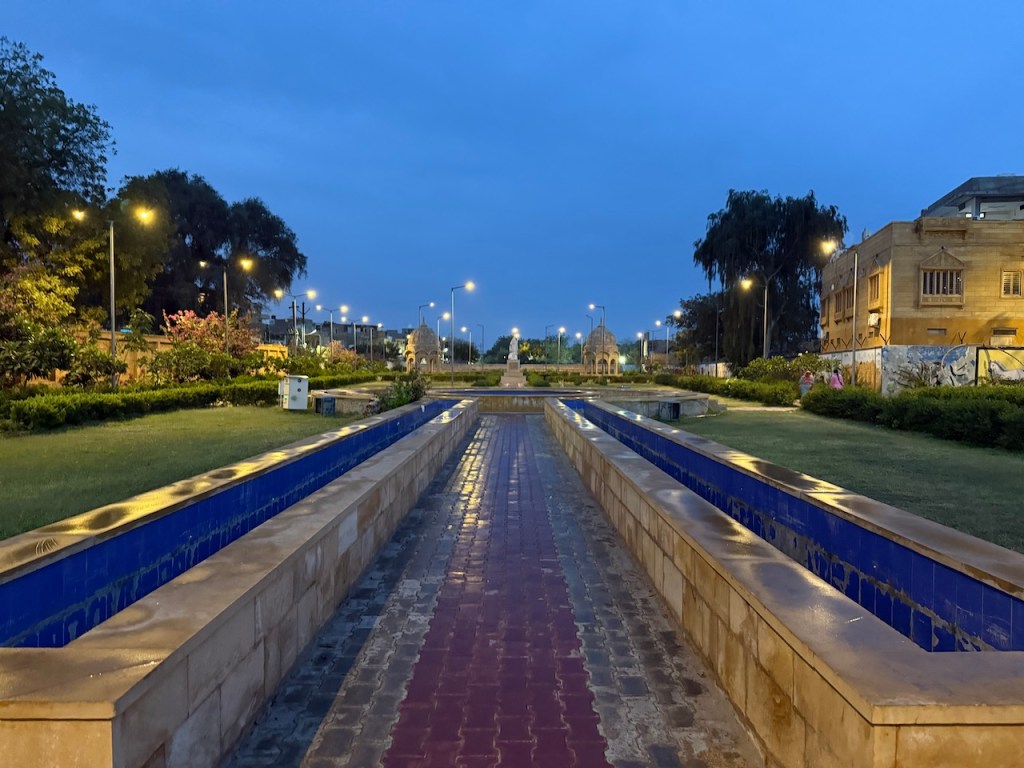
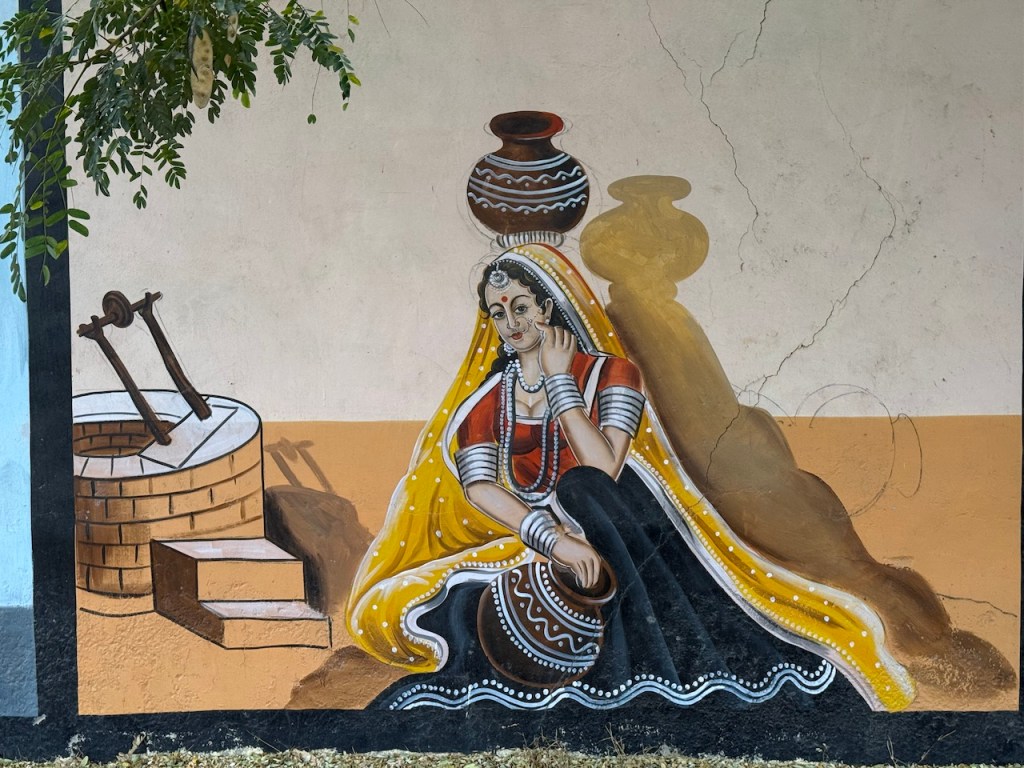
The next morning we walked to Nehru park, which is right next to the Mandir Palace hotel. The Nehru park is really well decorated, and has many beautiful murals painted on the compound walls.
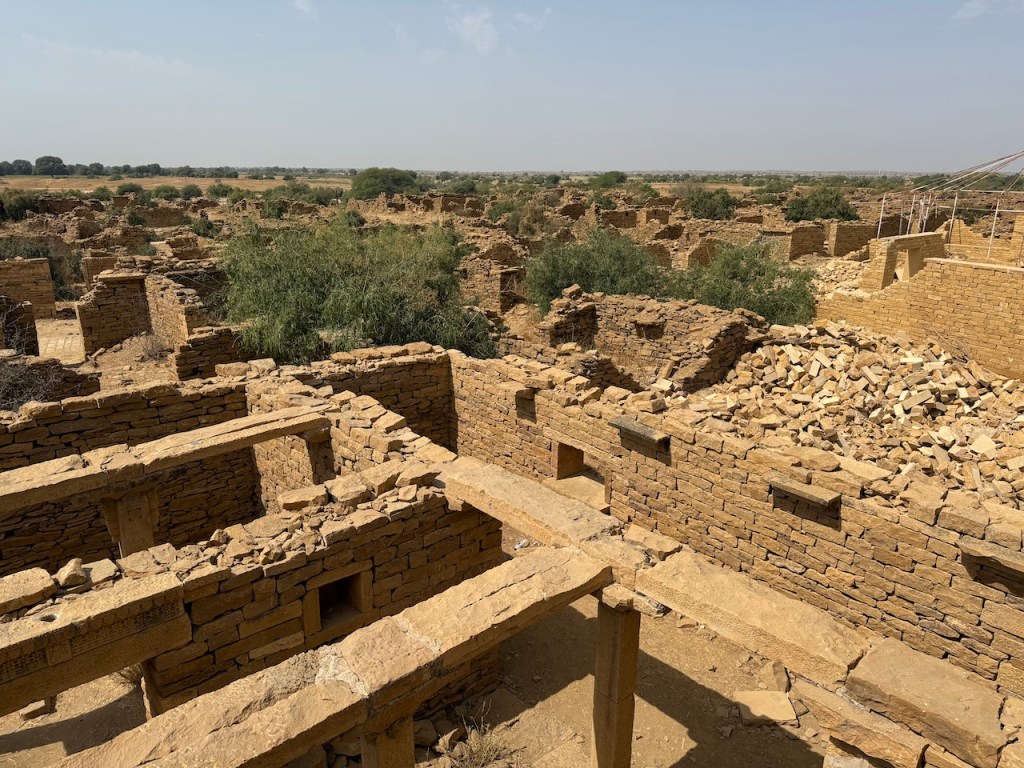
Later in the afternoon we visited Kuldhara village. This village was abandoned in early 19th century, perhaps due to persecution or due to lack of water.
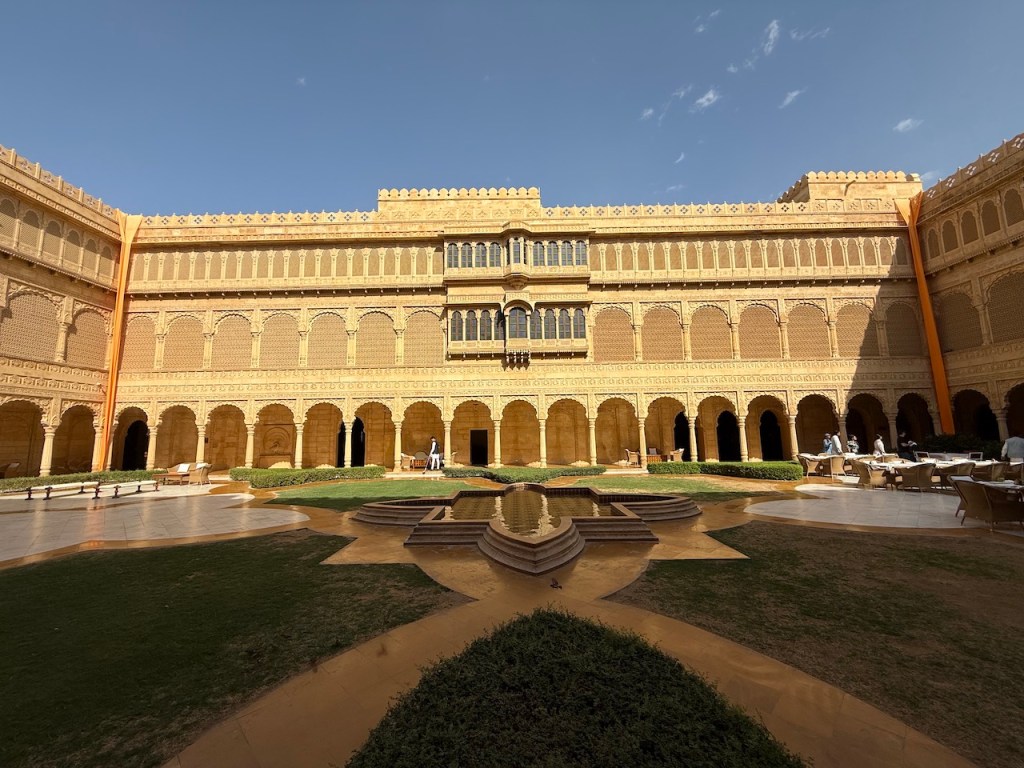
Next we had lunch at the Suryagarh Hotel, and later did a tour of the hotel. It’s a remarkable five star hotel with beautiful architecture.
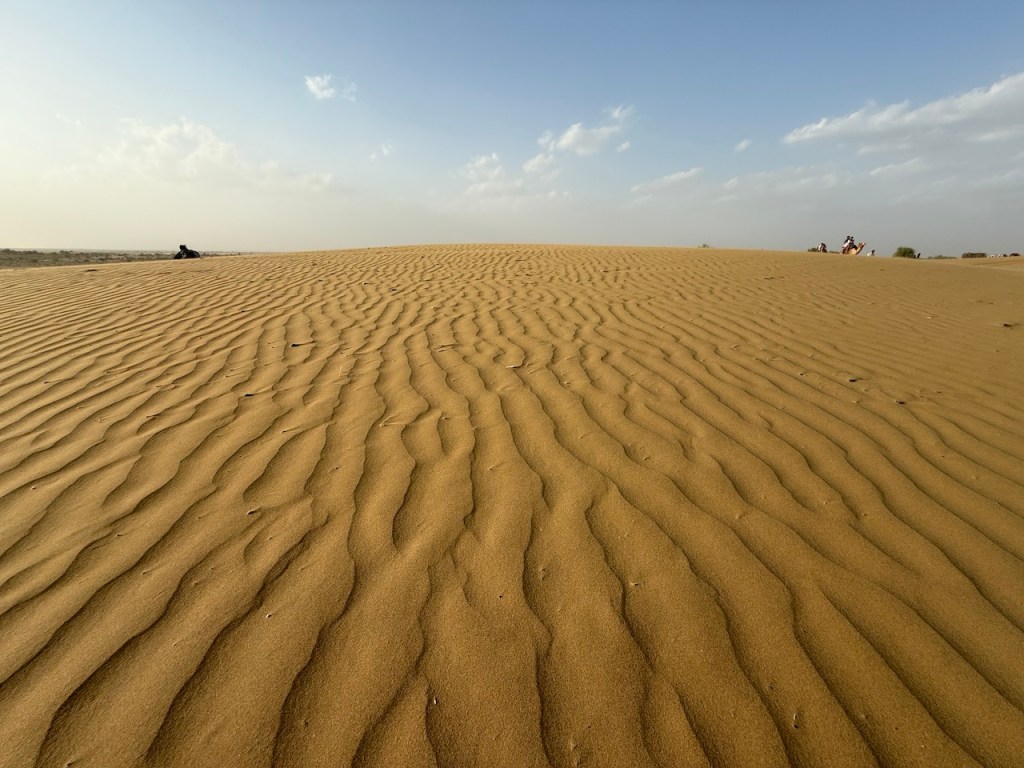
Our last visit of the day was to the Thar desert by a jeep. We watched the sunset, which was very pretty. There are many activities possible, e.g. Camel ride, Buggy ride, dune bashing on the jeep.
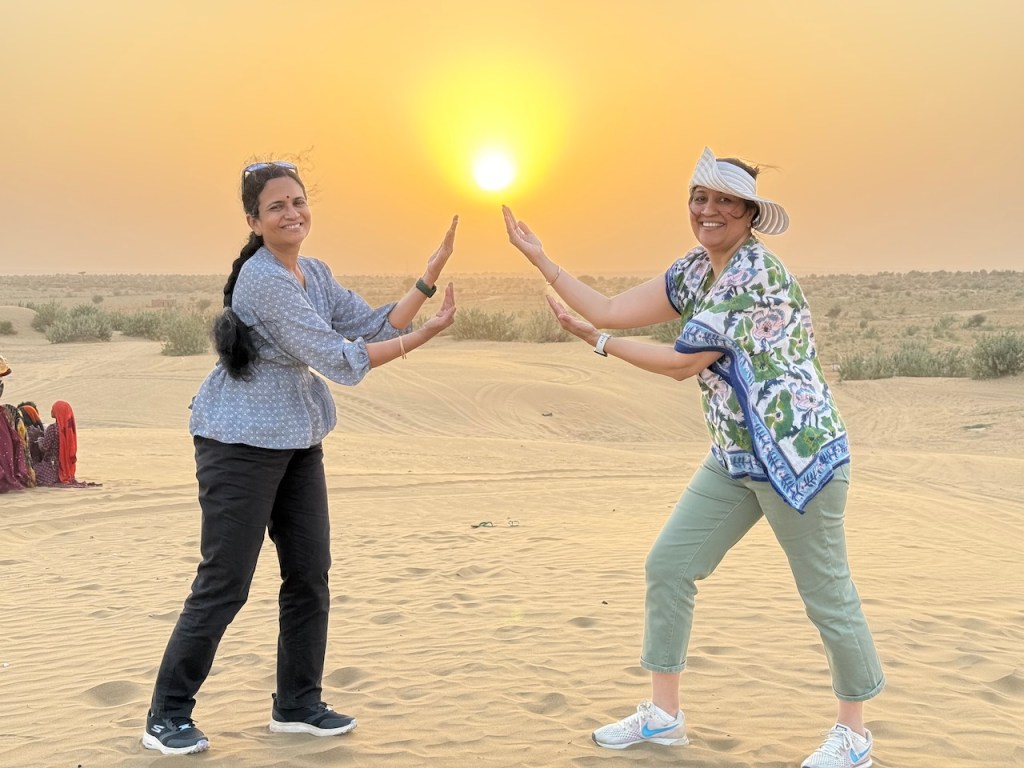
Our 9 days in Udaipur, Jodhpur and Jaisalmer were great. We had a great immersive experience into the history and culture of Rajasthan. All these three cities are worth visiting, but during the cooler months of October to February.
 My Travels - by Sivamani